
What does the evidence really say?
Ashwagandha has become one of the most talked-about herbal supplements in the country, marketed for everything from stress and sleep to testosterone and a sharper mind.
It has a long history in Ayurvedic medicine, but history alone isn’t evidence. The question I care about is simpler: what have decent human studies actually found?
So let’s look at what we know.
What Is Ashwagandha?
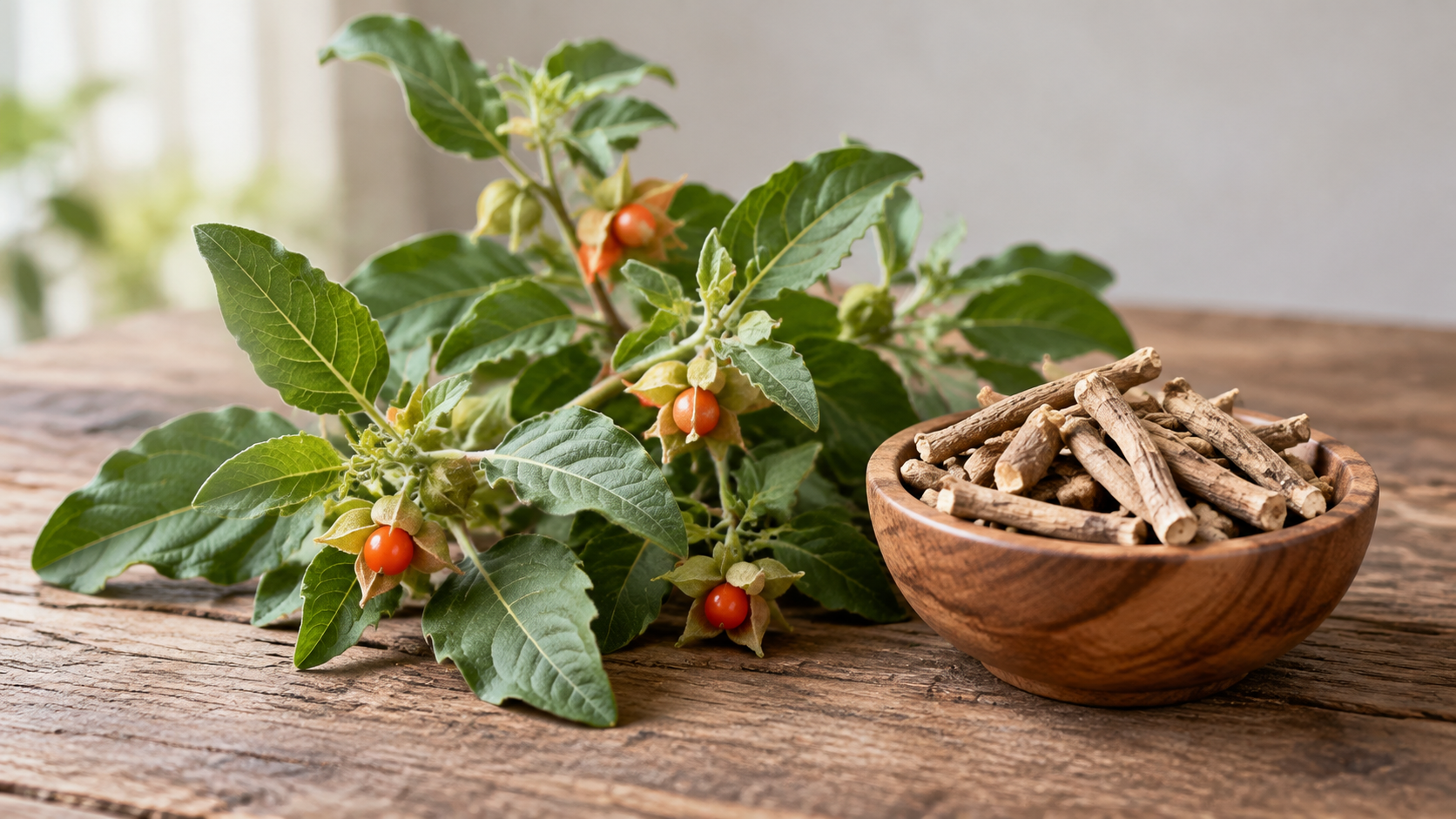
Ashwagandha (Withania somnifera) is a small shrub in the nightshade family, and supplements are usually made from its root. It’s often described as an “adaptogen”, a term for substances claimed to help the body handle stress.
The root contains a group of compounds called withanolides, which are thought to be responsible for most of its effects. Different products contain very different amounts, which matters when you’re comparing studies to what’s on a shop shelf.
It’s sold as capsules, powders and gummies, often combined with other ingredients, at widely varying doses.
Why Is It Being Studied?
Laboratory and animal research suggests ashwagandha may influence the body’s stress response, including cortisol, and may have mild calming effects on the nervous system.
That gives researchers a reasonable biological rationale for studying it. But as I’ve said before on Suppliwell, a plausible mechanism is not proof of benefit in people.
What matters is what well-designed human trials have found.
What Have Human Studies Found?
The most studied claim is stress and anxiety. In one 2019 trial, 60 healthy but stressed adults took ashwagandha extract or placebo for eight weeks. The ashwagandha group reported greater reductions in stress and anxiety scores, and their morning cortisol fell.
Another trial from the same year, in 60 adults, found similar results on anxiety measures over 60 days.
When researchers pooled this literature in a 2022 systematic review and meta-analysis, they found ashwagandha did better than placebo for stress and anxiety, but they were careful to note the trials were small, mostly short, and often at unclear risk of bias. That’s a fair summary: the direction looks promising, the certainty is low.
What about memory and thinking? Here the evidence is much thinner. A handful of small studies hint at modest improvements, but there is no large, well-designed trial showing ashwagandha improves cognition or protects the brain. Anyone claiming it “boosts memory” is well ahead of the science.
It’s also worth noting that most trials have used standardised extracts at specific doses. A cheap powder with unknown withanolide content may not match what was tested.
Is It Safe?
Short-term use at typical doses appears reasonably well tolerated for most healthy adults. The commonest side effects are digestive upset and drowsiness.
There are, however, some genuine cautions. Case reports have linked ashwagandha to liver injury, including a 2020 case series from Iceland and the US, so anyone with liver problems, or who develops symptoms like dark urine or yellowing skin, should stop and see a doctor.
It can affect thyroid hormone levels, may amplify the effect of sedatives, and is not recommended in pregnancy. If you take regular medication, particularly for thyroid, anxiety or sleep, check with your GP or pharmacist first.
My answer is:
Ashwagandha may take the edge off stress for some people in the short term, and the early evidence is genuinely interesting. But the trials are small and short, and there’s no good evidence it improves memory or protects the brain.
That makes it difficult to say:
“Ashwagandha will sharpen your mind.”
I’d call that claim too strong. If stress is the real issue, it’s worth asking what else might help first: sleep, exercise, and talking to someone often beat a capsule.
Important Note
This article is educational and isn’t intended to diagnose, treat, cure or prevent disease. If you’re experiencing significant changes in memory, thinking, mood or neurological function, seek advice from an appropriately qualified healthcare professional.
References
Salve J, et al. (2019). Adaptogenic and anxiolytic effects of ashwagandha root extract in healthy adults: a double-blind, randomized, placebo-controlled clinical study. Cureus, 11(12), e6466.
Lopresti AL, et al. (2019). An investigation into the stress-relieving and pharmacological actions of an ashwagandha (Withania somnifera) extract. Medicine, 98(37), e17186.
Akhgarjand C, et al. (2022). Does ashwagandha supplementation have a beneficial effect on the management of anxiety and stress? A systematic review and meta-analysis of randomized controlled trials. Phytotherapy Research, 36(11), 4115–4124.
Björnsson HK, et al. (2020). Ashwagandha-induced liver injury: a case series from Iceland and the US Drug-Induced Liver Injury Network. Liver International, 40(4), 825–829.
Want to understand more about brain health?
Download the free Suppliwell Brain Health Handbook.