
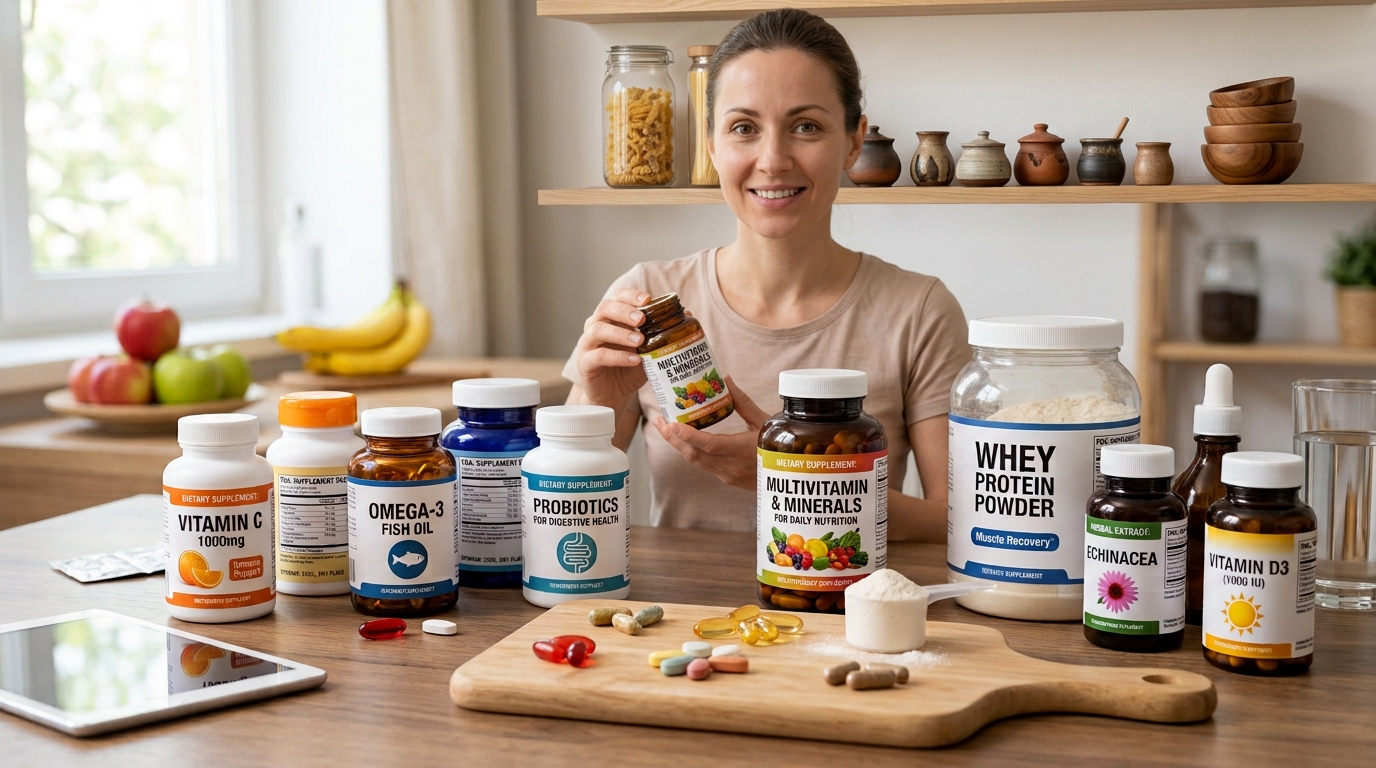
Article-at-a-Glance
- Dietary supplements include vitamins, minerals, botanicals, and other compounds meant to fill nutritional gaps, not replace regulated medications.
- Unlike prescription drugs, supplements only need to follow good manufacturing practices, meaning the FDA doesn’t test them for efficacy before they hit store shelves.
- The global botanical supplement market has grown at a staggering pace, jumping from an 86% sales increase in just over a decade to a projected $93 billion market by 2015.
- Whole foods often outperform pills for nutrient absorption, though supplements like vitamin D, omega-3s, and B12 fill real gaps for specific populations.
Walk into any pharmacy, and you’ll find aisles stacked with bottles promising everything from sharper focus to stronger bones. But what actually makes something a “dietary supplement,” and how do you know if it’s worth your money?
The answer matters more than most people realize. Supplements occupy a strange middle ground in the health world — not quite food, not quite medicine, and regulated in ways that surprise most consumers.
What Counts as a Dietary Supplement
A dietary supplement is any product taken by mouth that contains a “dietary ingredient” meant to add nutritional value to your diet. That’s the technical definition, but in practice, it covers a lot of ground — vitamins, minerals, herbs, amino acids, enzymes, and even concentrated extracts from plants like hops or turmeric.
How Supplements Differ From Prescription Medications
Here’s where things get interesting. Prescription drugs go through years of clinical trials before the FDA approves them. Manufacturers must prove the drug works and is safe at specific doses.
Supplements don’t follow that path. A company can sell a new botanical extract without ever proving it does what the label claims. That doesn’t mean supplements are dangerous or ineffective — many have solid research behind them — but the burden of proof works differently.
This distinction shows up clearly when you look at the botanical supplement industry. Between 1995 and 2006, U.S. sales of botanical dietary supplements jumped by 86%, according to industry data. That growth happened largely without the kind of rigorous efficacy testing required for pharmaceuticals.
So how does the system keep products safe if it’s not testing for effectiveness? The answer lies in manufacturing standards rather than clinical outcomes.
Good Manufacturing Practice vs FDA Efficacy Testing
The FDA requires botanical dietary supplements to be prepared using good manufacturing practice, often shortened to GMP. This means facilities have to follow specific hygiene, labeling, and quality-control procedures. GMP does not require proof that the product delivers the health benefit advertised on the bottle. That gap between manufacturing quality and proven efficacy is exactly why independent verification matters so much in this space.
Vitamins, Minerals, Botanicals, and Other Categories
Not all supplements are created equal, and they don’t all serve the same purpose. Some fill nutritional gaps left by a limited diet. Others target specific concerns like sleep, mood, or joint health using plant-based compounds. Broadly, most supplements fall into one of these categories:
- Essential vitamins and minerals (vitamin C, zinc, vitamin A, magnesium)
- Fatty acids like omega-3s
- Botanical extracts (hops, turmeric, echinacea)
- Probiotics and prebiotics for gut health
- Amino acids and specialty compounds
Each category has its own research base, dosage considerations, and quality concerns—which is why understanding the market’s rapid growth matters before you start shopping.
When Food Beats Supplements for Nutrients
Here’s something the supplement industry doesn’t advertise loudly — whole foods often deliver nutrients more effectively than pills do. Your body recognizes food. It knows what to do with the vitamin C in an orange or the magnesium in a handful of almonds in ways it doesn’t always replicate with an isolated compound.
What the Annals of Internal Medicine Study Found
A study published in the Annals of Internal Medicine found that nutrients from food lowered the risk of death and cancer. Researchers didn’t find the same protective association when those same nutrients came from supplements. That gap between food-sourced and supplement-sourced nutrients has become one of the more important findings in nutrition science over the past decade.
Vitamin C: Best Absorbed From Citrus, Bell Peppers, and Kiwi
Vitamin C supports blood pressure health, tissue repair, and immune function. It also helps your body absorb certain types of iron more efficiently — a benefit that shows up specifically when vitamin C is consumed alongside iron-rich food, like squeezing lemon juice over spinach. Citrus fruits, bell peppers, and kiwi remain some of the most concentrated natural sources.
Zinc: Why Oysters and Beef Outperform Pills
Zinc supports brain health, heart health, and liver function, and it may help the body heal from conditions like gastric ulcers and pneumonia. Oysters and beef contain zinc in forms the body absorbs readily, alongside other trace minerals that work together in ways a single-ingredient capsule can’t fully replicate.
Vitamin A: Beta-Carotene From Sweet Potatoes and Carrots
Vitamin A has been linked to a lower risk of certain skin cancers, better vision (especially preventing night blindness), and stronger bone health. Sweet potatoes and carrots deliver this nutrient as beta-carotene, which your body converts to active vitamin A as needed — a built-in safety mechanism that helps prevent overdose, something isolated vitamin A supplements can’t offer.
Magnesium: Beans, Lentils, and Brain Volume Protection
Higher magnesium intake has been associated with larger brain volumes and a reduced risk of dementia. It’s also linked to a healthier immune system and a lower risk of certain cancers. Beans and lentils pack magnesium alongside fiber and protein, making them a more complete nutritional package than a standalone supplement.
None of this means supplements are useless — far from it. Some nutrients are genuinely hard to get enough of through diet alone, especially for people with specific health conditions, dietary restrictions, or limited sun exposure.
5 Supplements Worth Considering
Certain supplements have earned their place in the conversation because they address gaps that diet alone often can’t fill. These aren’t blanket recommendations — they’re worth discussing with a healthcare provider based on your individual situation.
1. Vitamin D: The Sunshine Vitamin You Take With Food
Adequate vitamin D levels may help mitigate symptoms of depression, reduce the risk of certain cancers, and reduce the risk of dementia, according to a 2023 study. Because vitamin D is fat-soluble, taking it with a meal that contains some fat significantly improves absorption.
2. Omega-3 Fatty Acids: Filling the Gap When You Skip Fish
Omega-3 deficiencies may affect mental health, as well as heart and brain health. If fatty fish like salmon or sardines rarely make it onto your plate, an omega-3 supplement can help close that nutritional gap.
Fish oil isn’t the only source, either. Algae-based omega-3 supplements have become a solid option for people following plant-based diets who still want the same EPA and DHA benefits.
3. B12: Essential If You Follow a Vegan Diet
B12 supports a healthy nervous system, and deficiencies can put you at risk for megaloblastic anemia. Because B12 occurs naturally almost exclusively in animal products, this is one of the clearest cases where supplementation isn’t just helpful—it’s often necessary. People most at risk for B12 deficiency include:
- Vegans and strict vegetarians
- Older adults with reduced stomach acid production
- People who’ve had gastric bypass surgery
- Individuals with certain autoimmune conditions affecting absorption
If you fall into any of these groups, a B12 supplement isn’t just a nice-to-have — it’s worth discussing with your doctor sooner rather than later.
Blood tests can confirm whether your levels are low, taking the guesswork out of whether supplementation makes sense for you.
4. Probiotics and Prebiotics for Gut and Mental Health
Gut health and a healthy microbiome may support brain health, immune function, inflammation management, and even longevity. Studies show that probiotic and prebiotic supplementation can positively affect mental health, making this one of the more surprising connections in modern nutrition research—your gut and your mood are more linked than most people realize.
How Botanical Supplements Get Standardized
Botanical supplements face a unique challenge that vitamins and minerals don’t: plants are naturally variable. Two batches of the same herb, grown in different soil or harvested at different times, can contain wildly different concentrations of active compounds. That’s exactly why standardization matters so much in this corner of the supplement world.
Without standardization, you could take the same supplement twice and get two completely different doses of the active ingredient. Reputable manufacturers address this through authentication, chemical testing, and biological verification.
Why Botanical Authentication Matters for Reproducibility
Before testing, manufacturers need to confirm they’re working with the correct plant species. Botanical misidentification isn’t rare, and it can mean the difference between a product that works and one that does nothing. Authentication typically involves comparing physical characteristics and genetic markers against verified reference samples.
Chemical Standardization Using LC/MS-MS
Once a botanical is authenticated, chemical standardization measures the exact concentration of active compounds using techniques like liquid chromatography with tandem mass spectrometry, often abbreviated as LC/MS-MS. This method can detect and quantify specific molecules down to trace amounts, giving manufacturers a precise readout of what’s actually in each batch.
Biological Standardization With Cell-Line Testing
Chemical testing tells you what’s present, but biological standardization tells you what it does. Researchers often use cell-line assays to measure a compound’s biological activity—for example, how strongly a plant extract activates a specific receptor compared to a known reference substance.
This dual approach, chemical plus biological, gives a much fuller picture than either method alone. A compound might be present in high concentration but show weak biological activity, or vice versa, which is exactly why serious researchers rarely rely on just one standardization method.
Understanding this process makes the next case study more meaningful, because it shows standardization in action—using a botanical that’s been used medicinally for nearly a century.
Case Study: How Hop Extracts Became a Supplement
Few botanicals illustrate the standardization process better than hops — yes, the same plant that flavors beer. Long before craft brewing became trendy, hop preparations were used as dietary supplements for their hypnotic and anxiolytic properties, and they’re still used today for managing menopausal hot flashes in women.
What makes hops such a compelling case study is the decades of research behind identifying exactly which compound does the work, and how scientists confirmed its activity using the same standardization techniques discussed above.
The History of Hops for Menstrual Complaints Since the 1930s
Physicians were prescribing hop preparations for women’s menstrual complaints as early as the 1930s. That’s nearly a century of traditional use predating the modern research that eventually explained why hops worked the way they did.
Identifying 8-Prenylnaringenin as the Key Estrogenic Compound
Researchers eventually isolated the specific compound responsible for hops’ estrogen-like effects: 8-prenylnaringenin, often abbreviated as 8-PN. Among all the compounds found in hops, 8-PN showed the highest affinity to estrogen receptors, making it the primary candidate for explaining the plant’s traditional uses.
But affinity alone doesn’t tell the whole story. Scientists needed to measure how strongly that affinity translated into biological activity compared with the body’s own estrogen.
That’s where cell-line testing came into play. Using an alkaline phosphatase induction assay in Ishikawa cells — a standard method for measuring estrogenic activity — researchers found that 8-PN could induce alkaline phosphatase activity at up to 86% of the effectiveness shown by 17β-estradiol, the body’s natural estrogen.
That 86% figure matters because it demonstrates real, measurable biological activity rather than just a chemical presence with no functional effect.
In Ishikawa cell testing, 8-prenylnaringenin (8-PN) induced alkaline phosphatase activity up to 86% as effectively as the natural hormone 17β-estradiol — a benchmark that helped confirm hops’ traditional use for hormone-related symptoms.
Comparing Estrogen Receptor Binding to Estradiol
When researchers compared binding strength directly, 8-PN’s affinity for estrogen receptors was about one-tenth that of 17β-estradiol. That’s a meaningful distinction — 8-PN isn’t a perfect substitute for the body’s natural hormone, but it’s potent enough to produce a measurable effect, which explains why hop-based supplements have shown promise for managing hot flashes without functioning as a full hormone replacement.
This kind of precise comparison is exactly why chemical and biological standardization matter so much for botanicals. Without it, “hops extract” on a label could mean almost anything in terms of actual potency.
Why Spent Hops Showed Stronger Estrogenicity Than Fresh Cultivars
Here’s where things get genuinely surprising. A hop extract prepared from spent hops — meaning hops that had already been used once, typically in brewing — showed greater estrogenicity than hop cultivars grown fresh in New Mexico. That result runs counter to what most people would assume, since “spent” material sounds like it should be less potent, not more.
This finding highlights something important about botanical supplements: potency doesn’t always follow intuitive patterns. Processing methods, growing conditions, and even what happens to a plant after its primary use can all influence the final concentration of active compounds. It’s a reminder of why lab testing matters more than assumptions when it comes to botanical products, and it reinforces a few practical points worth keeping in mind:
- Source and processing history can change a botanical’s potency significantly
- Chemical testing alone can’t predict biological activity — both are needed
- Traditional use, like hops dating back to the 1930s, often points researchers toward compounds worth studying further
- Standardized extracts offer more consistency than raw or unprocessed botanical material
FAQ
A few questions come up repeatedly when people start researching dietary supplements, so let’s tackle them directly.
Do Dietary Supplements Need FDA Approval Before Selling?
No. Dietary supplements only need to be manufactured in accordance with good manufacturing practice guidelines set by the FDA. Unlike prescription drugs, the FDA doesn’t need to test or approve a supplement’s efficacy before it reaches store shelves.
Can Supplements Replace a Healthy Diet?
Not really. Research, including a study published in the Annals of Internal Medicine, found that nutrients from food were linked to a lower risk of death and cancer, while the same association wasn’t found with supplement-sourced nutrients.
Supplements work best to fill specific gaps — like B12 for someone following a vegan diet — rather than as a substitute for a varied, nutrient-dense diet.
Who Should Consider Taking B12 Supplements?
Vegans, older adults with reduced stomach acid, people who’ve had gastric bypass surgery, and those with certain autoimmune conditions are among the groups most likely to benefit from B12 supplementation. B12 supports a healthy nervous system, and deficiency can lead to megaloblastic anemia.
A simple blood test can confirm whether supplementation is necessary in your specific case.
Are Botanical Supplements Tested for Safety Like Drugs?
Not in the same way. Botanical supplements must follow good manufacturing practice, but the FDA doesn’t require standardization or efficacy testing the way it does for pharmaceutical drugs. That’s why reputable manufacturers often go beyond the minimum requirement, using chemical and biological standardization methods voluntarily.
What Makes a Supplement “Standardized”?
A standardized supplement has been verified through botanical authentication, chemical testing (often using LC/MS-MS), and sometimes biological testing using cell-line assays to confirm actual activity. The hops case study shows this process in action — researchers didn’t just identify 8-PN chemically; they confirmed its estrogenic activity using Ishikawa cell testing, comparing it directly against natural estradiol.
Understanding these standardization methods gives you a real edge when comparing products, since it helps separate supplements backed by legitimate testing from those relying purely on marketing claims.