
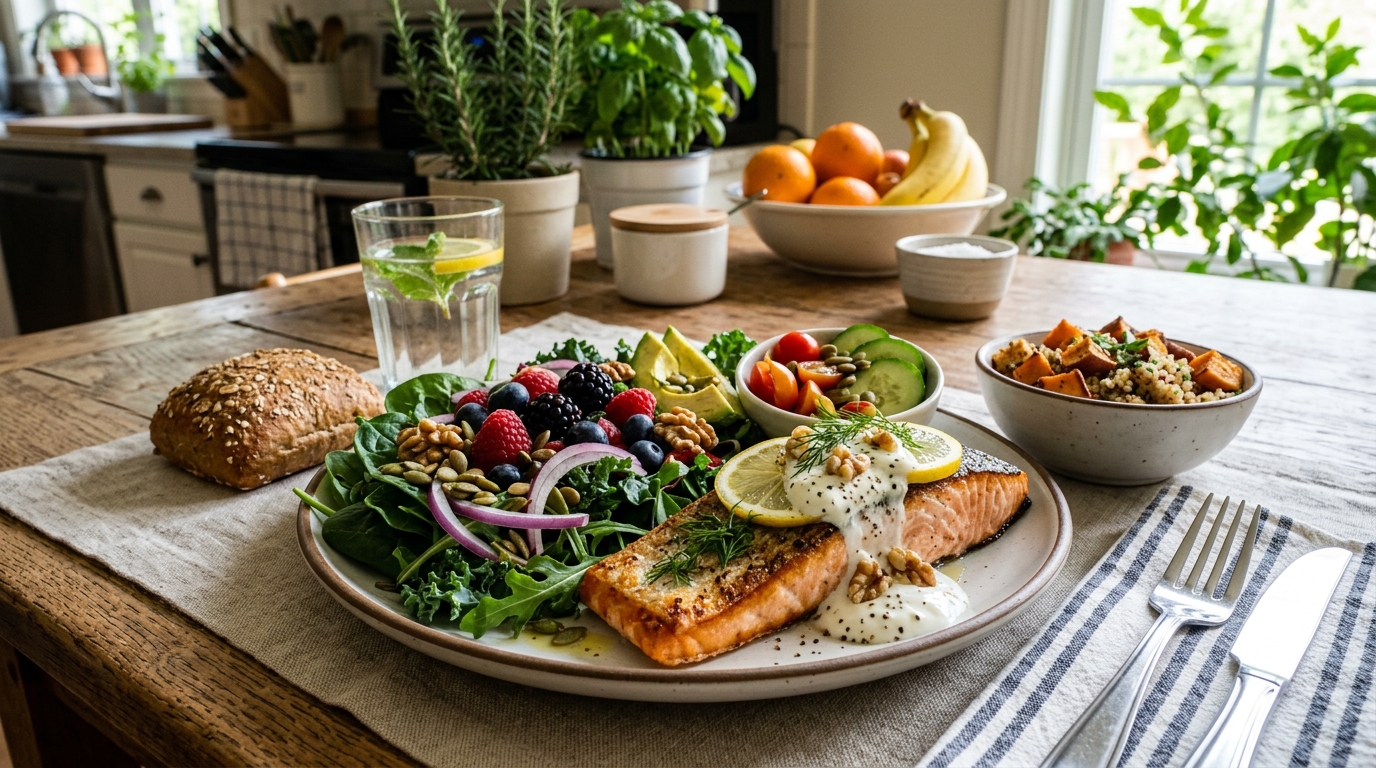
A brain-healthy diet looks a lot like the traditional Mediterranean way of eating: plenty of colorful plants, fish over red meat, healthy oils instead of butter, and sugar treated as a rare indulgence rather than a daily habit.
What you scoop onto your plate three times a day does more than fuel your muscles or fill your stomach. It shapes the physical structure of your brain cells, influences how much inflammation builds up in your body, and determines how well blood and oxygen reach the tissue that controls memory, mood, and thinking. For readers who want a deeper dive into how nutrition science translates into daily meal choices, NourishMinds has become a go-to resource for breaking down complex brain research into practical eating habits.
Article-at-a-Glance
- A brain-healthy diet centers on whole plant foods, oily fish, and healthy oils like olive or rapeseed oil, while limiting red meat, sugar, and salt.
- Diet affects brain health by influencing blood flow, inflammation, and the structure of brain cells themselves, not just overall body weight.
- The MedEx study found that people who followed a Mediterranean-style diet for six months showed measurable improvements in memory and thinking tests.
- No single food, pill, or supplement prevents dementia; the overall eating pattern matters most over time.
- Resources like NourishMinds can help translate the latest brain nutrition research into everyday, doable meal habits.
Why Your Diet Shapes Your Brain
Your brain is one of the most metabolically demanding organs in your body, and it depends entirely on what you feed it. Every meal supplies the raw materials your brain cells use to communicate, repair themselves, and generate the energy needed to keep you thinking clearly.
A balanced diet is one of the most powerful, low-cost tools available for protecting long-term brain health, according to Alzheimer’s Research UK.
No magic food guarantees a sharp mind for life. Instead, brain health responds to patterns built over months and years, which is exactly why small, consistent changes carry so much weight.
How Food Affects Brain Cells and Inflammation
Diet directly impacts the structure and function of brain cells, the amount of inflammation circulating through your body, and how efficiently your brain produces energy. Foods high in refined sugar and unhealthy fats tend to promote inflammation, which can interfere with communication between neurons over time. On the flip side, nutrient-dense whole foods support the membranes surrounding brain cells and help keep inflammation in check.
This isn’t a vague, feel-good claim; it’s a measurable biological process. When inflammation runs high for extended periods, it can damage the delicate signaling pathways your brain relies on for memory formation and quick thinking.
The Blood Flow Connection Between Heart and Brain
Your brain needs a constant, generous supply of oxygen-rich blood to function properly, and that supply depends heavily on the health of your heart and blood vessels. An unhealthy diet raises the risk of high blood pressure and clogged arteries, both of which restrict how much blood actually reaches brain tissue.
Think of your circulatory system as the delivery network for your brain. If arteries narrow or blood pressure spikes, the brain receives less of what it needs to keep neurons firing efficiently, which can show up as brain fog, slower recall, or difficulty concentrating.
Why No Single Food Prevents Dementia
It’s tempting to search for one superfood that will single-handedly ward off cognitive decline, but that’s not how brain health works. Alzheimer’s Research UK is clear: no single food or supplement has been proven to prevent dementia on its own.
What actually moves the needle is the overall dietary pattern sustained over years, not an occasional handful of blueberries or a fish oil capsule taken sporadically. That’s why diet guides increasingly focus on whole eating patterns like the Mediterranean diet rather than isolated ingredients.
The Mediterranean Diet Blueprint for Brain Health
When researchers and dietitians talk about brain-healthy eating, the Mediterranean diet usually comes out on top. It isn’t a strict, complicated meal plan but rather a flexible way of eating built around whole, minimally processed foods.
| Food Group | Role in the Diet |
|---|---|
| Fruits, vegetables, wholegrains, legumes | Base of every meal, high in fiber |
| Olive oil or rapeseed oil | Primary cooking fat, replaces saturated fats |
| Oily fish | Main protein source, eaten 2-3 times weekly |
| Herbs and spices | Flavor booster, replaces added salt |
| Red meat and sugary treats | Occasional, not everyday foods |
Researchers have studied this pattern for decades, and its consistent link to lower dementia rates in Mediterranean countries has made it the gold standard for brain-focused nutrition advice.
Plant-Based Foods That Should Fill Your Plate
A traditional Mediterranean diet leans heavily on whole, unprocessed plant foods that are naturally high in fiber. That means fruit, vegetables, wholegrains, and legumes like peas, beans, and lentils should make up the bulk of what lands on your plate at most meals.
Nuts and seeds round out this plant-heavy approach, offering healthy fats and additional fiber. Rather than treating vegetables as a side dish, the Mediterranean model puts them front and center, with meat playing a much smaller supporting role.
Why Berries and Leafy Greens Stand Out
Not all plant foods offer the same benefits, and two categories in particular tend to get singled out for brain health: berry fruits and green leafy vegetables. Alzheimer’s Research UK notes these foods may be particularly beneficial for supporting cognitive function compared to other produce.
Blueberries, strawberries, spinach, and kale are easy, practical additions to almost any meal. Tossing a handful of berries into breakfast or adding leafy greens to lunch doesn’t require a complete diet overhaul, yet it targets the food categories most closely linked to brain benefits.
Best Oils for Cooking: Olive and Rapeseed
Swapping butter and other saturated fats for olive oil is one of the simplest changes you can make in your kitchen. Olive oil is the traditional cooking fat throughout Mediterranean countries, and it brings healthy monounsaturated fats to the table instead of the saturated fats linked to clogged arteries and reduced blood flow to the brain.
If olive oil isn’t readily available or affordable where you live, rapeseed oil is an excellent alternative. Both oils handle everyday cooking tasks, from sautéing vegetables to dressing a salad, without sacrificing the brain-protective benefits of cutting saturated fat.
Using Herbs and Spices Instead of Salt
Reaching for herbs and spices instead of the salt shaker does double duty: it cuts sodium intake while actually boosting flavor. Garlic, rosemary, basil, cumin, and paprika can transform a plain dish into something worth savoring, all without raising blood pressure the way excess salt does.
High blood pressure is one of the key ways diet damages brain health, since it restricts blood flow to brain tissue over time. Building a habit of seasoning with herbs rather than salt is a small kitchen shift that supports both heart and brain health simultaneously.
How Often to Eat Fish and Red Meat
Protein choices matter just as much as vegetables when it comes to brain-healthy eating patterns. Fish, especially oily varieties, should be your primary protein source.
- Eat oily fish like salmon, mackerel, or sardines around two to three times per week.
- Limit red meats such as beef, lamb, and pork so they don’t dominate your weekly meal plan.
- Choose fish over red meat whenever possible when planning dinners.
This isn’t about eliminating red meat entirely, but rather shifting the balance so fish plays the starring role most weeks. That shift alone accounts for a meaningful chunk of what makes the Mediterranean diet distinct from typical Western eating patterns.
Where Sugar and Alcohol Fit In
Sugary treats aren’t banned outright in a Mediterranean-style approach to eating, but they’re reserved for special occasions rather than daily indulgence. Pastries, candies, and sugary desserts show up occasionally, not as a regular part of the weekly rotation.
Alcohol follows a similar rule of moderation. A traditional Mediterranean diet doesn’t include heavy drinking, though an occasional glass of wine alongside a meal fits comfortably within the pattern. The emphasis stays on infrequent, mindful indulgence rather than daily reliance on either sugar or alcohol.
What the Research Says About Mediterranean Eating
The Mediterranean diet isn’t just a trendy meal plan; decades of observational research and, more recently, controlled clinical trials examine its direct effects on brain function.
Lower Dementia Rates in Mediterranean Countries
Studies consistently show that people living in Mediterranean countries who follow the traditional diet of the region tend to have a lower risk of developing dementia compared to populations eating more processed, Western-style diets. This pattern has held up across multiple large population studies over the years, lending real weight to dietary recommendations built around this eating style.
Inside the MedEx Study: Diet Meets Physical Activity
One of the most compelling recent pieces of evidence comes from the MedEx study, which recruited 108 people between the ages of 55 and 74. Researchers asked some participants to follow a Mediterranean-style diet for six months, while others were also asked to increase their physical activity levels alongside the dietary changes.
To help participants actually stick with the new eating pattern, the study provided substantial support: online coaching, regular contact with researchers, food deliveries, and group sessions designed to build lasting habits. This structured support shows how much accountability and practical tools matter when trying to change long-term eating behavior.
Improvements in Memory and Thinking Test Scores
The results from MedEx were encouraging. Participants who followed the Mediterranean-style diet performed better on tests measuring brain function than they did at baseline.
Early findings suggest the approach succeeded not only in helping people eat better, but also in producing measurable improvements in memory and thinking abilities. That’s significant, since it moves beyond correlation and starts to show a more direct cause-and-effect relationship between diet and cognitive performance.
What makes MedEx particularly useful for everyday readers is the age range studied. These weren’t young, already-healthy volunteers; they were people in their mid-fifties to mid-seventies, a group many readers can relate to directly when thinking about their own brain health journey.
Omega-3 Fatty Acids and Your Brain
Omega-3 fatty acids play a starring role in brain structure and function, which explains why they show up so often in nutrition advice aimed at protecting cognitive health.
Why Oily Fish Is a Top Brain Food
Oily fish stands out as one of the richest natural sources of omega-3 fatty acids, and those fats are essential building blocks for brain cell membranes. Salmon, mackerel, sardines, and trout all deliver generous amounts of these beneficial fats, which is exactly why the Mediterranean diet recommends eating fish two to three times weekly rather than treating it as an occasional side dish.
Are Omega-3 Supplements a Good Substitute?
For vegans, vegetarians, or anyone who simply doesn’t enjoy fish, omega-3 supplements might seem like an easy workaround. However, these supplements don’t contain the full range of nutrients found naturally in fish itself.
Fish delivers a combination of omega-3s, protein, vitamin D, and other micronutrients working together, something a single supplement can’t fully replicate. While supplements may offer some benefit, they shouldn’t be viewed as a complete substitute for eating fish when it comes to supporting brain health.
How to Start Eating for Brain Health Today
Knowing what a brain-healthy diet looks like is only half the equation; actually putting it into practice is where the real benefit happens.
Small Changes That Make a Big Difference
You don’t need to overhaul your entire pantry overnight to start protecting your brain. Even small changes to your diet can have a major effect on brain health, mood, anxiety levels, and sleep patterns.
Start with one shift at a time: swap butter for olive oil this week, add a serving of oily fish to your dinner plan next week, or toss a handful of berries into your morning routine. These incremental changes add up over months, building toward the kind of consistent eating pattern that research links to better cognitive outcomes.
Why It’s Never Too Late to Begin
Age isn’t a barrier to improving your diet for brain health. It’s never too late to make dietary changes, and the MedEx study shows this clearly: participants in their mid-fifties to mid-seventies still saw measurable improvements in memory and thinking after just six months of dietary change.
Whether you’re 35 or 75, the principles remain the same: prioritize whole plant foods, choose fish over red meat, cook with healthy oils, and save sugar and alcohol for occasional treats. Your brain responds to these changes regardless of when you decide to start.
Your Next Meal Is a Step Toward a Sharper Brain
Every plate you fill is another opportunity to support long-term brain health, so start with your very next meal. For more practical guidance on turning brain nutrition science into everyday habits, NourishMinds offers resources designed to make the transition easier.
Best Oils for Cooking: Olive and Rapeseed
Swapping butter and other saturated fats for olive oil is one of the simplest changes you can make in your kitchen. Olive oil is the traditional cooking fat throughout Mediterranean countries, and it brings healthy monounsaturated fats to the table instead of the saturated fats linked to clogged arteries and reduced blood flow to the brain.
If olive oil isn’t readily available or affordable where you live, rapeseed oil is an excellent alternative. Both oils handle everyday cooking tasks, from sautéing vegetables to dressing a salad, without sacrificing the brain-protective benefits of cutting saturated fat.
Using Herbs and Spices Instead of Salt
Reaching for herbs and spices instead of the salt shaker does double duty: it cuts sodium intake while actually boosting flavor. Garlic, rosemary, basil, cumin, and paprika can transform a plain dish into something worth savoring, all without raising blood pressure the way excess salt does.
High blood pressure is one of the key ways diet damages brain health, since it restricts blood flow to brain tissue over time. Building a habit of seasoning with herbs rather than salt is a small kitchen shift that supports both heart and brain health simultaneously.
What the Research Says About Mediterranean Eating
The Mediterranean diet isn’t just a trendy meal plan; decades of observational research and, more recently, controlled clinical trials examine its direct effects on brain function.
Lower Dementia Rates in Mediterranean Countries
Studies consistently show that people living in Mediterranean countries who follow the traditional diet of the region tend to have a lower risk of developing dementia compared to populations eating more processed, Western-style diets. This pattern has held up across multiple large population studies over the years, lending real weight to dietary recommendations built around this eating style.
Inside the MedEx Study: Diet Meets Physical Activity
One of the most compelling recent pieces of evidence comes from the MedEx study, which recruited 108 people between the ages of 55 and 74. Researchers asked some participants to follow a Mediterranean-style diet for six months, while others were also asked to increase their physical activity levels alongside the dietary changes.
To help participants actually stick with the new eating pattern, the study provided substantial support: online coaching, regular contact with researchers, food deliveries, and group sessions designed to build lasting habits. This structured support shows how much accountability and practical tools matter when trying to change long-term eating behavior.
Improvements in Memory and Thinking Test Scores
The results from MedEx were encouraging. Participants who followed the Mediterranean-style diet performed better on tests measuring brain function than they did at baseline.
Early findings suggest the approach succeeded not only in helping people eat better, but also in producing measurable improvements in memory and thinking abilities. That’s a significant finding, since it moves beyond correlation and starts to demonstrate a more direct cause-and-effect relationship between diet and cognitive performance.
What makes MedEx particularly useful for everyday readers is the age range studied. These weren’t young, already-healthy volunteers; they were people in their mid-fifties to mid-seventies, a group many readers can relate to directly when thinking about their own brain health journey.
Omega-3 Fatty Acids and Your Brain
Omega-3 fatty acids play a starring role in brain structure and function, which explains why they show up so often in nutrition advice aimed at protecting cognitive health.
Why Oily Fish Is a Top Brain Food
Oily fish stands out as one of the richest natural sources of omega-3 fatty acids, and those fats are essential building blocks for brain cell membranes. Salmon, mackerel, sardines, and trout all deliver generous amounts of these beneficial fats, which is exactly why the Mediterranean diet recommends eating fish two to three times weekly rather than treating it as an occasional side dish.
Are Omega-3 Supplements a Good Substitute?
For vegans, vegetarians, or anyone who simply doesn’t enjoy fish, omega-3 supplements might seem like an easy workaround. However, these supplements don’t contain the full range of nutrients found naturally in fish itself.
Fish delivers a combination of omega-3s, protein, vitamin D, and other micronutrients working together, something a single supplement can’t fully replicate. While supplements may offer some benefit, they shouldn’t be viewed as a complete substitute for eating fish when it comes to supporting brain health.
How to Start Eating for Brain Health Today
Knowing what a brain-healthy diet looks like is only half the equation; actually putting it into practice is where the real benefit happens.
Small Changes That Make a Big Difference
You don’t need to overhaul your entire pantry overnight to start protecting your brain. Even small changes to your diet can have a major effect on brain health, mood, anxiety levels, and sleep patterns.
Start with one shift at a time: swap butter for olive oil this week, add a serving of oily fish to your dinner plan next week, or toss a handful of berries into your morning routine. These incremental changes add up over months, building toward the consistent eating pattern research links to better cognitive outcomes.
Why It’s Never Too Late to Begin
Age isn’t a barrier to improving your diet for brain health. It’s never too late to make dietary changes, and the MedEx study shows this clearly: participants in their mid-fifties to mid-seventies still saw measurable improvements in memory and thinking after just six months of dietary change.
Whether you’re 35 or 75, the principles remain the same: prioritize whole plant foods, choose fish over red meat, cook with healthy oils, and save sugar and alcohol for occasional treats. Your brain responds to these changes regardless of when you decide to start.
Your Next Meal Is a Step Toward a Sharper Brain
Every plate you fill is another opportunity to support long-term brain health, so start with your very next meal. For more practical guidance on turning brain nutrition science into everyday habits, NourishMinds offers resources designed to make the transition easier.