
What does the evidence really say?
Iron tablets are among the most commonly taken supplements in Britain, and they’re increasingly sold with brain claims: more focus, less fog, sharper thinking.
Iron is genuinely essential for the brain. But there’s a big difference between treating a deficiency and topping up an already healthy level, and confusing the two can do real harm.
So let’s look at what we know.
What Is Iron?
Iron is a mineral your body uses to make haemoglobin, the protein in red blood cells that carries oxygen, and the brain needs a steady oxygen supply to work at all.
Iron also plays a direct role in making neurotransmitters, the chemical messengers between brain cells.
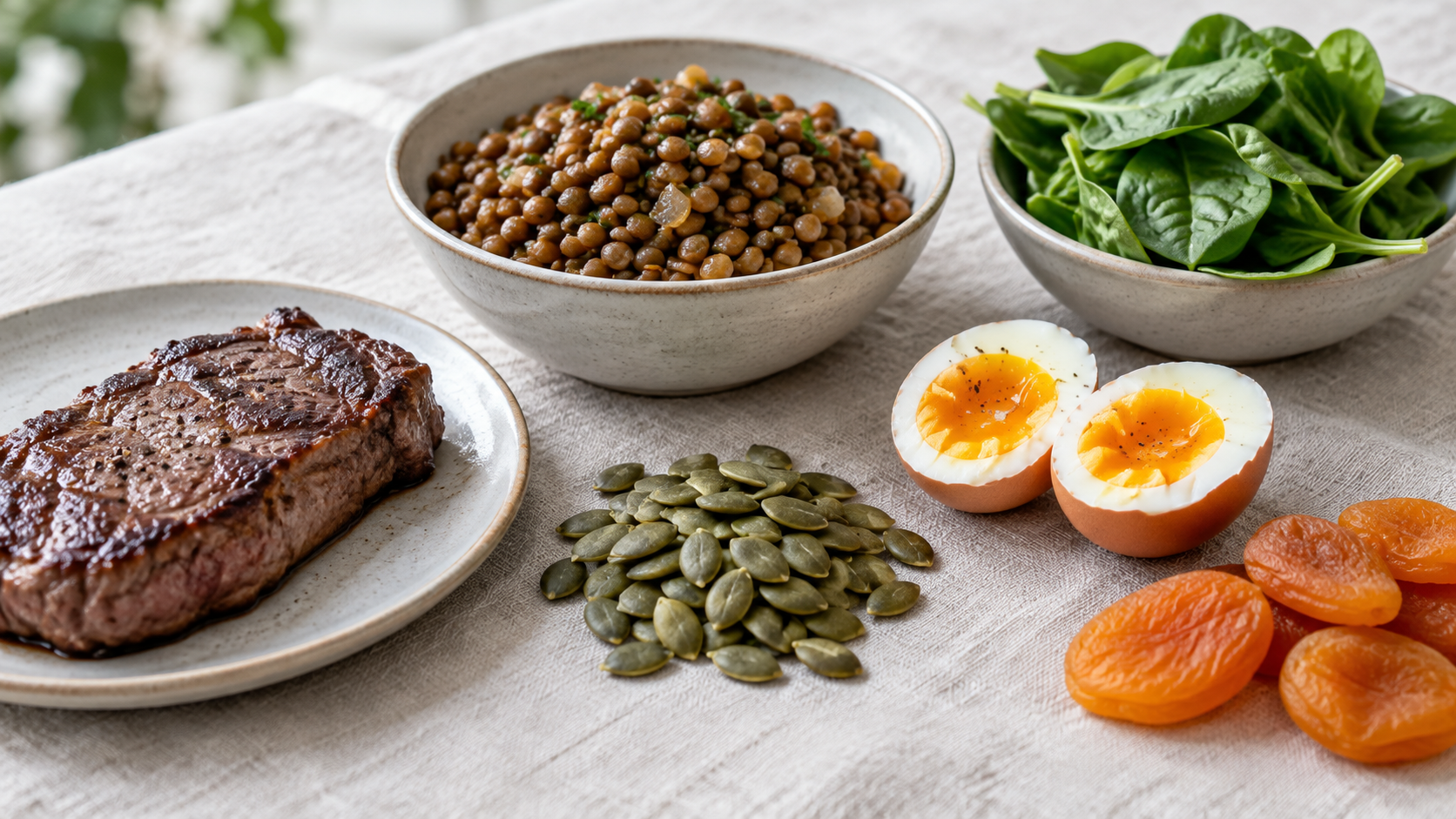
We get it from food: red meat, eggs, lentils, beans, spinach, pumpkin seeds and fortified cereals. The body has no easy way to get rid of excess iron, which is why the balance matters so much.
Why Is It Being Studied?
Iron deficiency is the commonest nutrient deficiency in the world, and even before it causes anaemia it can leave people tired, foggy and struggling to concentrate.
In older adults, anaemia has repeatedly been linked to worse cognitive performance. A 2013 systematic review found a consistent association between anaemia and poorer thinking skills in elderly people, and a higher likelihood of dementia diagnoses.
That makes iron a serious topic, not a fad. The catch is the word “association”: anaemia often travels with illness and poor diet, so it doesn’t prove iron tablets would sharpen a healthy brain.
What Have Human Studies Found?
The clearest trial evidence comes from people who are actually deficient. In a well-designed 2007 study, young women with low iron were given iron supplements or placebo for sixteen weeks. Those whose iron levels recovered improved significantly on measures of attention and memory.
That’s a real, meaningful finding, and it’s exactly why iron deficiency should be treated. But notice what it is not: it is not evidence that iron helps people whose levels are already fine.
For healthy adults with normal iron, there is no good trial evidence that supplements improve memory, focus or thinking. The benefit tracks the deficiency, not the supplement.
So the honest summary: if you’re low, fixing it can genuinely clear the fog. If you’re not low, iron pills are very unlikely to do anything for your brain.
Is It Safe?
This is where iron differs from most supplements: taking it when you don’t need it can be harmful. The body stores excess iron rather than excreting it, and overload can damage the liver, heart and pancreas.
Common side effects include constipation, nausea and dark stools. And because symptoms of deficiency, such as tiredness and poor concentration, have many possible causes, self-diagnosing and self-treating with iron can mask something else entirely.
NHS guidance is clear: only take iron supplements if a blood test and your doctor say you need them. If you suspect you’re low, ask your GP for a test rather than reaching for the bottle.
My answer is:
Iron deficiency is worth finding and treating, and correcting it can genuinely improve concentration and memory. But if your levels are normal, iron supplements won’t sharpen your brain, and taking them anyway can be harmful.
That makes it difficult to say:
“An iron supplement will clear your brain fog.”
Only if the fog is caused by a deficiency, and that’s a question for a blood test, not a bottle.
Important Note
This article is educational and isn’t intended to diagnose, treat, cure or prevent disease. If you’re experiencing significant changes in memory, thinking, mood or neurological function, seek advice from an appropriately qualified healthcare professional.
References
Murray-Kolb LE, Beard JL (2007). Iron treatment normalizes cognitive functioning in young women. The American Journal of Clinical Nutrition, 85(3), 778–787.
Andro M, et al. (2013). Anaemia and cognitive performances in the elderly: a systematic review. European Journal of Neurology, 20(9), 1234–1240.
Want to understand more about brain health?
Download the free Suppliwell Brain Health Handbook.