
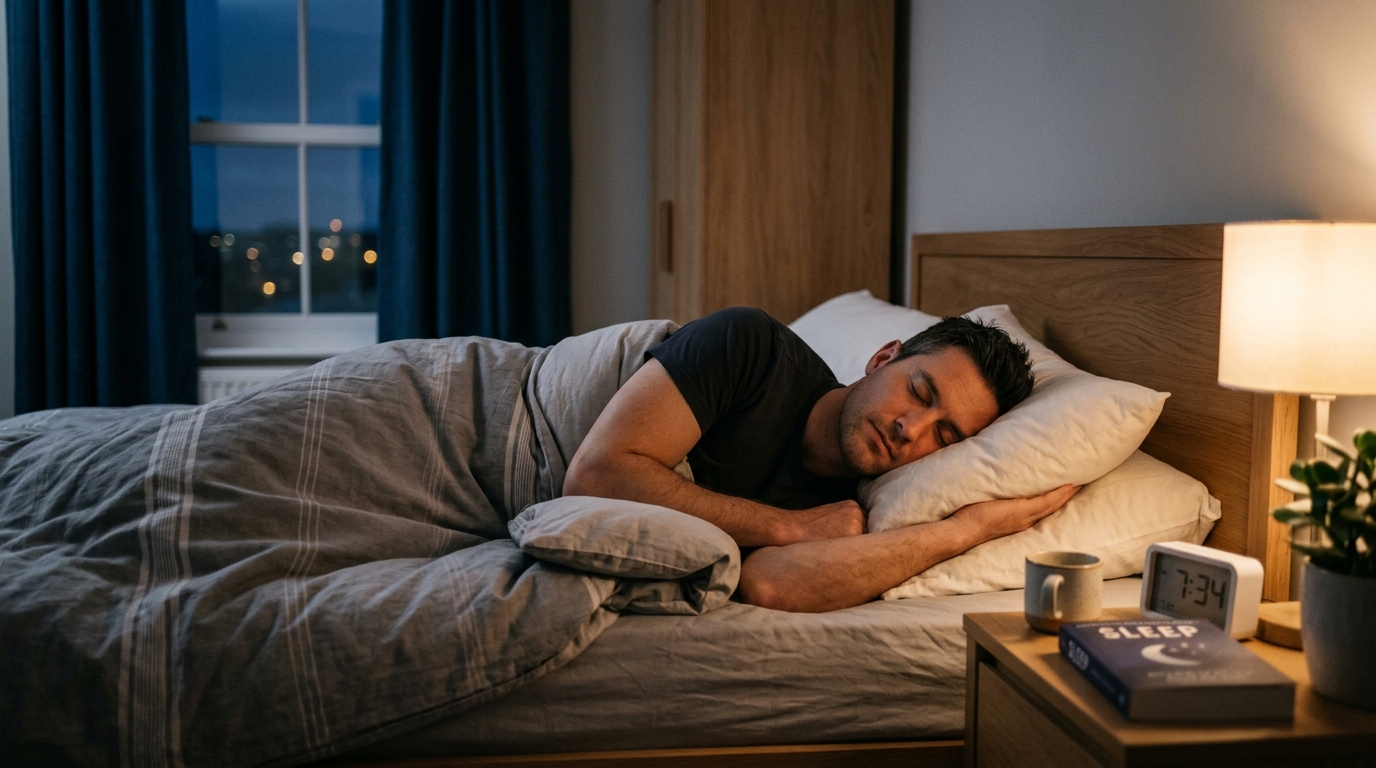
Most adults need somewhere between seven and nine hours of sleep every single night to function properly.
That single number might not seem shocking, but the way most people treat sleep suggests they’ve never actually heard it. Nearly a third of adults report getting less than the recommended amount on a regular basis, treating sleep like a flexible expense rather than a biological requirement. Sleep isn’t a luxury you can skip when life gets busy. It’s maintenance for your brain, your heart, and nearly every system in your body.
Key Takeaways
Before diving into the details, here’s what you need to know about how much sleep adults actually require and why it matters so much for daily functioning.
- Adults aged 18 to 64 need seven to nine hours of sleep per night, while adults 65 and older typically need seven to eight hours
- Sleep occurs in cycles lasting roughly 90 minutes, and getting a full number of cycles matters more than just hitting a total hour count
- Sleeping less than six hours a night is linked to higher long-term risks for heart disease, stroke, and memory problems
- Consistency in bedtime and wake time plays a bigger role in sleep quality than most people realize
- Small environmental changes, like room temperature and lighting, can dramatically improve how rested you feel each morning
Sleep science has come a long way from the old “eight hours for everyone” advice, and organizations like RestfulMD have helped shift the conversation toward understanding sleep as a personalized biological need, not a one-size-fits-all rule. The truth is, your ideal sleep number depends on your age, your lifestyle, and even your genetics. Let’s break down exactly what the research says.
The Real Numbers Behind Adult Sleep Needs
Sleep recommendations aren’t guesswork. They come from decades of research tracking how sleep duration affects everything from reaction time to disease risk. The consensus among sleep researchers is clear enough to publish as a standard, yet flexible enough to account for real human variation.
Here’s where things get specific. The National Sleep Foundation and similar research bodies have settled on ranges rather than single numbers, because bodies don’t all operate identically.
7 to 9 Hours Is the Sweet Spot for Ages 18-64
If you’re anywhere between 18 and 64 years old, your target is seven to nine hours of sleep each night. This range gives your body enough time to cycle through the different sleep stages multiple times, which is where the real restorative work happens. Falling short of seven hours regularly starts to chip away at cognitive function, mood stability, and physical health.
Think of this range less like a rigid rule and more like a target zone. Some nights you might need closer to nine hours, especially after physical exertion or illness. Other nights, seven hours might leave you feeling perfectly sharp.
Adults 65 and Older Need 7 to 8 Hours
Once you cross into your mid-60s, the recommended range narrows slightly to seven to eight hours. This isn’t because older adults need dramatically less rest. Rather, sleep architecture changes with age, often resulting in lighter, more fragmented sleep patterns even when total time in bed stays the same.
Why Your Needs Might Differ From the Average
Averages are useful, but they don’t tell the whole story. Some people are genuine short sleepers who function perfectly well on six hours, while others need a solid nine or more to feel human. Genetics plays a role, as do activity level, stress, and even diet.
- Short sleepers: A small percentage of the population carries a genetic variation allowing them to thrive on less sleep without health consequences
- Long sleepers: Others require nine hours or more consistently, and forcing themselves into a shorter window leads to noticeable performance drops
- Life stage factors: Pregnancy, recovery from illness, and high physical training loads can all temporarily increase sleep needs beyond the standard range
Sleep needs generally stabilize by the early twenties. Before that, especially during the teenage years, the body demands noticeably more rest to support rapid development. Understanding where you fall within these ranges takes self-observation, but the seven-to-nine-hour window remains a reliable starting point for almost every adult.
Weight Gain and Immune Function
Short on sleep, and your body starts making some questionable decisions about food. Sleep deprivation throws off the hormones ghrelin and leptin, which tell you when you’re hungry and when you’re full. As a result, tired people tend to crave more calorie-dense food and struggle to recognize when they’ve had enough. Pair that with a weakened immune response, and you’ve got a body that’s both more likely to gain weight and less equipped to fight off the common cold going around the office.
Mood, Attention Span, and Job Performance
Sleep loss doesn’t stay contained to just feeling groggy. It bleeds into every corner of daily life, starting with mood regulation. People running on insufficient sleep report higher rates of irritability, anxiety, and depressive symptoms, and the effect compounds the longer the sleep debt builds.
Attention span takes a hit too. Reaction times slow down, focus becomes harder to maintain, and decision-making quality drops noticeably after even a single night of poor sleep. This isn’t just an inconvenience. It shows up in measurable ways at work, from missed deadlines to costly errors that wouldn’t happen on a well-rested brain.
Job performance suffers as a direct result. Employees who consistently sleep less than the recommended range report more difficulty concentrating, lower productivity, and strained relationships with coworkers. It’s not a stretch to say that sleep is one of the most underrated performance tools available, and it costs nothing but time.
- Reduced immunity: fewer hours of sleep mean fewer infection-fighting cytokines circulating in your system
- Elevated blood pressure: chronic short sleep is linked to sustained increases in blood pressure over time
- Depressive symptoms: sleep and mood share a two-way relationship, where poor sleep worsens mood and low mood disrupts sleep
- Slower cognitive processing: attention, memory consolidation, and problem-solving all decline with insufficient rest
Why Timing Matters More Than You Think
Getting seven to nine hours matters, but when those hours happen matters almost as much. Your body runs on an internal clock, and that clock thrives on predictability.
The Power of a Consistent Bedtime
Going to bed at the same time every night, weekends included, trains your body to anticipate sleep. This regularity strengthens your circadian rhythm, making it easier to fall asleep quickly and wake up without a struggle. Irregular bedtimes, on the other hand, force your body to reset its internal clock over and over, which is exhausting.
This is one of the simplest changes you can make with an outsized payoff. You don’t need new gadgets or supplements. You just need discipline around a single number on the clock, applied consistently for a few weeks until your body catches on.
Why Waking Mid-Cycle Leaves You Groggy
Ever wake up from a full night’s sleep still feeling like you got hit by a truck? You probably woke up during slow-wave sleep, the deepest stage of your sleep cycle. Interrupting this stage leaves you with that heavy, disoriented feeling known as sleep inertia, and it can take a while to shake off.
The 90-Minute Sleep Cycle Rule
A complete sleep cycle lasts roughly 90 minutes to two hours, moving through light sleep, deep sleep, and REM sleep before starting over. Waking up at the end of a cycle, rather than in the middle of one, tends to leave you feeling far more refreshed even if the total sleep time is similar.
This is why sleep calculators that work backward from your wake-up time in 90-minute increments have become popular. Timing your sleep around complete cycles, rather than just chasing a total hour count, can make a noticeable difference in how rested you actually feel.
Napping the Right Way
Naps get a bad reputation, but done correctly, they’re a legitimate tool for recovering lost alertness without wrecking your nighttime sleep schedule.
The 10-15 Minute Power Nap
A short nap in the 10- to 15-minute range keeps you in the lighter stages of sleep, avoiding the deep sleep that causes grogginess upon waking. This is why a quick power nap can leave you feeling noticeably sharper within minutes, without the disoriented fog that comes from longer naps.
Set an alarm, keep it brief, and treat it like a reset button rather than a replacement for lost nighttime sleep.
The 90-Minute Full-Cycle Nap
If you have more time, a 90-minute nap lets you complete one full sleep cycle, including REM sleep. This type of nap can support memory consolidation and creative thinking, functioning almost like a mini overnight sleep session.
The catch is timing. Napping too close to your normal bedtime, even with a full-cycle nap, can make it harder to fall asleep later that night.
Building the Perfect Sleep Environment
Your bedroom setup plays a bigger role in sleep quality than most people give it credit for. Small adjustments to temperature, light, and sound can shift you from restless tossing to genuinely restorative sleep.
Ideal Bedroom Temperature: 60-67°F
Your body naturally drops in core temperature as part of the sleep process, and a cooler room supports that shift rather than fighting it. Keeping your bedroom between 60 and 67°F (15 and 19 °C) creates the right conditions for your body to settle into deeper sleep stages more easily.
If your room runs warmer than that, even small changes like breathable bedding or a fan pointed away from direct airflow can bring the temperature into range without cranking the air conditioning all night.
Why Total Darkness Matters
Light exposure, even small amounts from a phone charger or streetlight through the curtains, can interfere with melatonin production and disrupt sleep quality. Blackout curtains or a simple sleep mask can eliminate this interference and signal to your brain that it’s genuinely time to shut down.
White Noise: Helpful or Harmful?
Unexpected noise, whether it’s a car alarm or a neighbor’s late-night activity, can jolt you out of deep sleep stages without you even fully waking up, leaving you groggy the next morning without knowing why. Earplugs or a consistent white noise machine can mask these disruptions, creating a steady auditory backdrop that’s far less likely to interrupt your sleep cycles.
Not everyone responds the same way to background noise, so it’s worth experimenting to see whether silence, white noise, or something in between works best for your own sleep patterns.
7 Habits That Improve Sleep Quality Tonight
Knowing the science behind sleep is useful, but putting it into practice is what actually changes how you feel each morning. The good news is that improving sleep quality doesn’t require an overhaul of your entire lifestyle. A few consistent habits can make a measurable difference in just a few nights.
Here’s where the pieces come together into something you can actually act on tonight, rather than just theory to file away for later.
1. Stick to the Same Bedtime Every Night
Pick a bedtime you can realistically maintain seven days a week, including weekends, and stick to it. Your circadian rhythm thrives on predictability, and even a one-hour swing between weekday and weekend sleep schedules can create a mini version of jet lag that leaves you dragging through Monday morning.
2. Build a Wind-Down Routine
Give yourself a 30- to 60-minute buffer before bed dedicated to calming activities. Reading a physical book, light stretching, journaling, or a warm bath all send a signal to your nervous system that it’s time to downshift.
The specific activity matters less than the consistency. Doing the same sequence of calming actions each night trains your brain to associate that routine with the onset of sleep, making it easier to drift off once your head hits the pillow.
3. Cut Off Alcohol and Caffeine Early
Caffeine has a half-life of roughly five to six hours, meaning that afternoon coffee is still partially active in your system come bedtime. Alcohol might make you feel drowsy initially, but it fragments sleep later in the night and reduces the amount of restorative REM sleep you get. Cutting off caffeine by early afternoon and limiting alcohol a few hours before bed gives your body a fair shot at uninterrupted rest.
4. Avoid Spicy and Fried Foods Before Bed
Eating heavy, spicy, or fried meals close to bedtime raises core body temperature and can trigger acid reflux, both of which work directly against the natural temperature drop your body needs to fall into deep sleep.
Digestion takes energy and generates heat, which is the opposite of what your body needs as it prepares for sleep. A heavy meal sitting in your stomach can also cause physical discomfort, making it harder to settle into a comfortable position.
Try to finish eating at least two to three hours before bed. If you need a snack closer to bedtime, something light like a banana or a small handful of almonds won’t tax your digestive system the way a greasy takeout order will.
Spicy foods, in particular, have been linked to disrupted sleep patterns, likely because they raise body temperature and can trigger heartburn when you lie flat.
5. Put Screens Away Before Lights Out
The blue light emitted from phones, tablets, and laptops suppresses melatonin production, the hormone responsible for making you feel sleepy. Beyond the light itself, scrolling through emails or social media keeps your brain mentally engaged right when it should be slowing down.
| Screen Time Before Bed | Effect on Sleep |
|---|---|
| Within 30 minutes of bedtime | Significant melatonin suppression, delayed sleep onset |
| 1-2 hours before bedtime | Moderate disruption, still recommended to avoid |
| 3+ hours before bedtime | Minimal impact on sleep quality |
Try swapping your phone for a physical book in the last half hour before bed. If you use your phone as an alarm, consider switching to a basic alarm clock, so you’re not tempted to check notifications right before closing your eyes.
Many phones now include a night mode or blue light filter that can help if screen use right before bed is unavoidable, though it’s still less effective than putting the device away entirely.
Even a small reduction in evening screen time tends to help you fall asleep faster and wake up less often during the night.
6. Manage Your Body Temperature
Your body needs to drop its core temperature by a degree or two to initiate sleep, so anything that keeps you warm works against this natural process. A cool room, breathable pajamas, and moisture-wicking bedding all support this temperature drop rather than fighting it.
A warm shower about an hour before bed can actually help here too. The rapid cooling after you step out mimics the natural temperature drop your body is trying to achieve, nudging you toward sleepiness faster.
7. Use Blackout Curtains or an Eye Mask
Even minimal light exposure during the night can interfere with melatonin production and pull you out of deeper sleep stages. Blackout curtains eliminate outside light sources like streetlights or early morning sun, while a comfortable eye mask offers a portable solution for travel or shared living spaces where full room darkness isn’t an option.
Sleep Is Not Optional, It’s Essential Maintenance
Treating sleep as an afterthought is one of the most common health mistakes adults make, right alongside skipping meals or ignoring stress. Your body doesn’t just want seven to nine hours of rest. It genuinely requires that time to repair muscle tissue, consolidate memories, regulate hormones, and maintain a functioning immune system.
The habits outlined here aren’t complicated, but they do require consistency to actually work. Start with one or two changes, whether that’s a fixed bedtime or cutting off caffeine earlier in the day, and build from there. Your body will notice the difference faster than you might expect.
Frequently Asked Questions
Sleep questions tend to follow a similar pattern, so here are straightforward answers to the ones that come up most often.
Is It Bad to Sleep More Than 9 Hours a Night?
Occasionally sleeping longer than nine hours, especially after illness or physical exertion, isn’t a cause for concern. Regularly needing significantly more than nine hours, however, combined with still feeling tired, can sometimes signal an underlying health issue worth discussing with a doctor.
Can You Catch Up on Lost Sleep During the Weekend?
Sleeping in on weekends can help reduce some of the effects of sleep debt, but it doesn’t fully reverse the damage from a week of insufficient sleep. It can also throw off your circadian rhythm, making it harder to fall asleep at your normal time come Sunday night.
Why Do I Wake Up Tired Even After 8 Hours?
Waking up tired despite a full night’s sleep often points to poor sleep quality rather than quantity. Interruptions during deep sleep stages, an uncomfortable sleep environment, or waking up mid-cycle instead of at a natural break point can all leave you feeling groggy regardless of the total hours logged.
Does Age Really Change How Much Sleep I Need?
Yes, though the change is more gradual than dramatic. Sleep needs decrease from childhood through the teenage years before stabilizing around age 20, staying relatively consistent through most of adulthood.
Once someone reaches their mid-60s, the recommended range shifts slightly downward to seven to eight hours, partly due to natural changes in sleep architecture that come with aging.
Despite spending more time in bed, older adults often experience more fragmented sleep, so their total sleep needs don’t necessarily drop as much as some assume.
What’s the Difference Between Feeling Tired and Being Sleep Deprived?
Feeling tired is a temporary state that a good night’s sleep or a short nap can usually fix. Sleep deprivation is a cumulative condition that builds over days or weeks of insufficient rest, affecting mood, cognitive function, and physical health in ways that a single good night won’t fully reverse.
Chronic sleep deprivation often shows up as persistent difficulty concentrating, increased irritability, and a general sense of being “off” even on days that should feel normal. If tiredness has become your baseline rather than an occasional dip, it’s worth looking more closely at your overall sleep habits instead of treating it as something a strong cup of coffee can solve.
Recognizing the difference matters because the solutions aren’t the same. Tiredness might call for an earlier bedtime tonight, while genuine sleep deprivation usually requires a more consistent, longer-term approach to rebuilding healthy sleep patterns.