
Key Takeaways
- Whole herbs contain every part of the plant and offer a broad, time-tested spectrum of natural compounds working together.
- Extracts concentrate specific plant compounds, making them more potent but sometimes narrower in their range of benefits.
- Standardized extracts guarantee a set percentage of active ingredients, so you know exactly what you’re getting batch after batch.
- Reading ratios and percentages on labels (like 20:1 or “0.3% hypericin”) tells you how concentrated a product really is.
- The right choice between whole herbs and extracts depends on your goals, and later in this article we’ll break down exactly when each option makes the most sense.
Walk down any supplement aisle and you’ll spot the same herb sold three different ways: as a whole dried root, as a liquid extract, and as a capsule boasting “standardized to 95% active compound.” They’re not interchangeable, and picking the wrong one for your needs can mean the difference between feeling results and wondering why nothing’s happening.
The confusion is understandable. Herbal medicine has exploded in popularity, but label language hasn’t kept pace with consumer understanding.
Whole Herbs, Extracts, and Standardized Extracts at a Glance
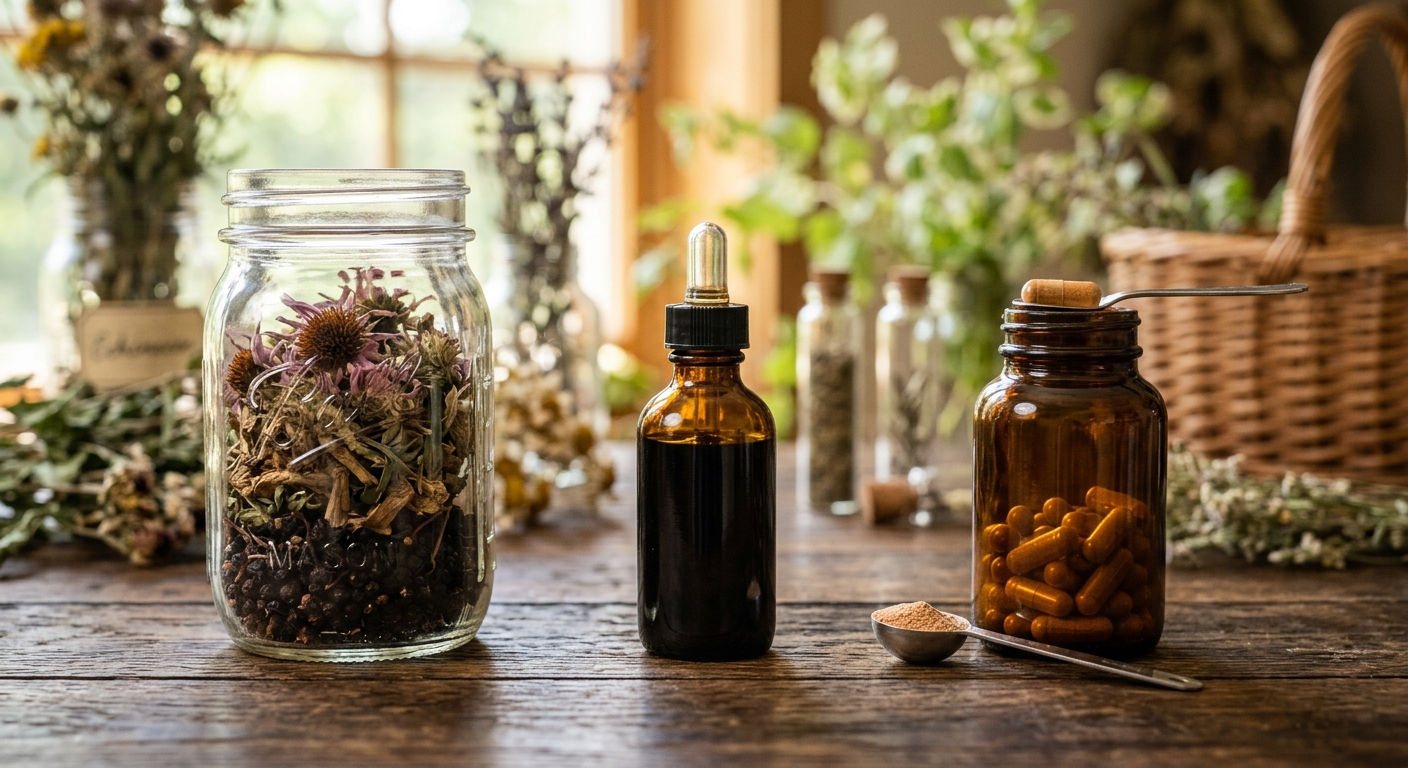
Three terms, three very different products. A whole herb is the entire plant material, dried and used as-is or encapsulated. An extract pulls specific compounds out of that plant using a solvent, concentrating them into a smaller, more potent form. A standardized extract goes one step further, guaranteeing a precise percentage of one or more active compounds so every batch delivers consistent strength.
Think of it like the difference between eating a whole orange, drinking fresh-squeezed orange juice, and taking a vitamin C tablet with a guaranteed 500mg dose. All three come from the same source, but the concentration, consistency, and intended use shift dramatically at each step.
What Is a Whole Herb Supplement?
A whole herb supplement contains the plant in its complete, unaltered form, including roots, stems, leaves, and flowers, depending on which parts are traditionally used. Manufacturers dry the plant material and either grind it into a powder for encapsulation or preserve it in alcohol or another solvent to create a tincture.
What sets whole herbs apart is that nothing’s been removed. Every phytochemical the plant naturally produces, known and unknown, stays in the final product. That matters more than it might seem.
How Whole Herbs Are Processed and Preserved
Processing a whole herb is fairly straightforward compared to extraction. Growers harvest the plant, dry it to remove moisture and prevent spoilage, then either encapsulate the dried powder directly or soak it in a solvent like alcohol to pull out a broad range of compounds for a tincture. Either method keeps the herb’s full chemical profile largely intact, which is the whole point.
Why Whole Herbs Contain Every Part of the Plant
Traditional herbalists have long argued that plants weren’t designed by nature to work one compound at a time. Many whole herb products intentionally include multiple plant parts because each part may carry its own set of beneficial compounds that support or balance the others. Strip away the stems or roots, and you might lose the counterbalancing elements that made the original herb gentle on the body in the first place.
How Soil, Weather, and Harvest Timing Change Each Batch
No two batches of a whole herb are chemically identical, and that’s not a flaw; it’s biology. An herb’s chemical makeup shifts depending on the soil it grew in, the weather during its growing season, and the exact moment it was harvested. Even the part of the plant used and the plant’s age at harvest will change the final product’s composition. Add in the fact that every individual plant carries its own genetic variation, and you’ve got a built-in source of natural inconsistency from one harvest to the next.
Why Whole Herbs Have Stood the Test of Time
Long before standardization or lab analysis existed, cultures worldwide relied on whole herbs to treat everything from digestive trouble to skin conditions. That history isn’t just interesting trivia; it’s a practical track record. Modern medicine grew out of whole-herb use, with early pharmacologists isolating compounds from plants that had already proven safe and effective through generations of traditional use.
Centuries of Traditional Use Across Cultures
From Traditional Chinese Medicine to Ayurveda to Western herbalism, whole herbs have been the foundation of healing practices for hundreds of years. This long history gives whole herbs something extracts often lack: a well-documented safety profile built on generations of real-world use rather than years of clinical trials.
The Synergy Theory: How Plant Compounds Work Together
Many traditional herbalists believe the different compounds within a plant don’t just coexist; they actively work together. One compound might enhance the absorption of another, while a third buffers potential side effects. This is the central argument for keeping herbs whole rather than isolating a single “active” ingredient.
- Some compounds may improve how well the body absorbs other compounds in the same plant.
- Certain constituents can soften or buffer the effects of more potent compounds, reducing side effects.
- The full spectrum of a plant’s chemistry includes many lesser-known compounds that haven’t been individually studied but may still contribute to the overall effect.
This is also why a standardized extract, despite its precision, won’t always replicate what a whole herb can do.
Why Whole Herb Doses Tend to Be Higher
Because whole herbs aren’t concentrated, you typically need more of them to feel an effect compared to an extract. This isn’t a downside so much as a trade-off: lower concentration generally means a gentler, more forgiving product, which is part of why whole herb supplements are often considered safer for long-term or everyday use.
What Makes an Extract Different From a Whole Herb
An extract starts with the same raw plant material as a whole herb supplement, but then a solvent, usually alcohol, water, or CO2, pulls specific compounds out of the plant matter, leaving behind the fibrous bulk. What’s left is a concentrated version of the herb’s chemistry, often many times stronger than the original plant by weight.
How Manufacturers Concentrate Active Compounds
The concentration process typically involves soaking the plant material in a solvent, then evaporating or filtering out the solvent to leave behind a potent residue of plant compounds. The strength of this final product is usually expressed as a ratio, which tells you exactly how much raw herb went into creating that concentrated extract.
Common Extraction Methods: CO2, Alcohol, and Glycerol
Different solvents pull out different compounds, which is why the extraction method matters as much as the herb itself. Alcohol-based extraction tends to pull out a broad range of plant chemicals, making it a popular choice for tinctures. CO2 extraction, often used for more delicate or heat-sensitive compounds, uses pressurized carbon dioxide instead of a liquid solvent. Glycerol, a sweeter and alcohol-free option, is often used when a gentler extraction is needed or when the final product needs to be alcohol-free for certain users.
What Does “Standardized” Actually Mean
Standardization takes the extraction process one step further by guaranteeing a specific, measurable amount of one or more compounds in every single batch.
Guaranteeing Consistency From Batch to Batch
When a supplement label says “standardized to 3% curcuminoids” or similar, that’s a promise, not just marketing language. It means every capsule in that bottle, and every bottle in that production run, contains the same measured amount of that compound. This matters because, as we covered, raw herbs vary naturally depending on soil, weather, and harvest timing. Standardization removes that guesswork for the consumer, so you know the dose you’re taking today matches the dose you took last month.
Two Approaches to Standardization Explained
Not all standardization works the same way, and understanding the difference changes how you shop for supplements. The first approach, rooted in the pharmaceutical “drug model” of herbal medicine, isolates and concentrates a single compound believed to drive the herb’s effects. The second approach, sometimes called spectrum-analysis standardization, uses a key compound as a marker of quality and potency while preserving the herb’s full natural chemical profile.
- Single-compound standardization: concentrates one specific constituent, often stripping away much of the plant’s other natural chemistry in the process.
- Spectrum-analysis standardization: uses a marker compound to confirm potency while keeping the broader blend of phytochemicals intact, so the final extract still looks and behaves like the whole herb.
The first method tends to produce a more drug-like, highly concentrated product. The second method tries to split the difference, offering the consistency of standardization without sacrificing the partnership whole-herb advocates value so highly.
Neither approach is inherently better. It depends entirely on what you’re trying to achieve. If you need a reliable, potent dose of one specific compound for a targeted effect, single-compound standardization makes sense. If you want the benefits of standardization without losing the broader therapeutic range of the whole plant, a spectrum-analysis extract is the smarter pick.
Marker Compounds vs Active Compounds
Here’s a detail that trips up a lot of shoppers: the compound used to standardize an extract isn’t always the same as the compound responsible for its effects. Sometimes a “marker compound” is chosen simply because it’s easy to measure in a lab, not necessarily because it’s the most important active ingredient. This is common with herbs where scientists haven’t fully identified every compound contributing to the plant’s benefits, so they pick a reliable marker instead and standardize around that.
The Hidden Risk of Over-Concentrating a Single Compound
Concentration sounds good until it isn’t. Push an extraction process too far in pursuit of a single “hero” compound, and you risk ending up with a product that behaves less like a traditional herb and more like an isolated pharmaceutical chemical, minus the clinical oversight that comes with actual drugs.
Why Isolating One Chemical Can Backfire
Almost no medicinal herb is known for doing just one thing. Most contain a complex blend of phytochemicals that work across multiple pathways in the body at the same time. When manufacturers isolate and concentrate just one of those compounds, they’re essentially betting that it’s the only one that matters, a bet that herbalists and increasingly some researchers argue isn’t always a safe one to make.
Many constituents in whole herbs remain poorly studied, and science still doesn’t fully understand how they interact with each other. Strip those lesser-known compounds away to concentrate a single marker ingredient, and you might inadvertently remove something that was quietly doing important work.
When an Extract Starts Acting Like a Drug Isolate
At very high concentrations, an herbal extract stops resembling the plant it came from and starts behaving more like a pharmaceutical isolate. This isn’t necessarily dangerous, but it does change the risk profile. A highly concentrated, single-compound extract can produce stronger effects, which also means a higher potential for side effects or interactions than the milder, more buffered whole herb.
This is part of why some standardized extracts, despite being backed by solid research on that one isolated compound, don’t always replicate the full range of benefits traditionally associated with the whole plant. Science has proven the efficacy of some concentrated extracts for specific, narrow biological actions, but “narrow” is the key word.
What Gets Lost When Scientists Focus on a Single Constituent
Chasing one compound means potentially losing sight of everything else the plant offers. Supporting compounds that aid absorption, buffer side effects, or contribute smaller, cumulative benefits often get left on the cutting room floor during aggressive extraction and purification. For enthusiasts who value the traditional, whole-plant approach to herbal medicine, this is the central trade-off worth weighing before reaching for a high-ratio extract.
How to Read Percentages and Ratios on Herbal Labels
Supplement labels throw around numbers like “20:1” or “0.3%” as if everyone instinctively understands them. Once you know how to read them, though, these numbers become one of the most useful tools for comparing products and figuring out exactly what you’re paying for.
What a 20:1 or 500:1 Ratio Really Means
A ratio like 20:1 tells you the extract contains 20 times the concentration of active compound found in the same weight of raw herb. A 500:1 ratio means that product is 500 times more concentrated, an extremely potent preparation by comparison. The bigger the gap between the two numbers, the stronger and more concentrated the extract.
Tincture Ratios: Plant-to-Alcohol Explained
Tinctures use a slightly different ratio system, typically expressed as plant-to-solvent. A 1:2 ratio means one part plant material was used for every two parts alcohol. Lighter, fluffier herbs often require more solvent, landing in the 1:4 or 1:5 range, while denser herbs need less, closer to 1:1. Particularly potent herbs can sometimes be diluted as far as 1:10 or even 1:20 and still deliver a noticeable effect.
Turmeric and St. John’s Wort: Real Label Examples
Two of the most commonly standardized herbs on the market illustrate this well. Turmeric root is frequently standardized to guarantee a specific percentage of curcuminoids, the compounds largely credited with turmeric’s reputation. St. John’s Wort takes a slightly more complex approach, often standardized to reflect two separate active chemicals at once.
Seeing these numbers on a label tells you far more than a generic “high potency” claim ever could. It gives you a concrete, comparable figure to weigh against other products on the shelf.
Here’s a quick reference for how these common standardizations typically appear on labels:
| Herb | Typical Standardisation | What It Means |
|---|---|---|
| Turmeric | Standardized to a set % of curcuminoids | Guarantees a consistent level of turmeric’s primary active compounds |
| St. John’s Wort | 0.3% hypericin, 3-5% hyperforin | Standardized around two separate active chemicals simultaneously |
| Generic herbal extract | 20:1 ratio | 20 times more concentrated than the raw herb by weight |
| Highly concentrated extract | 500:1 ratio | 500 times more concentrated, an extremely potent preparation |
Why Mushroom Extracts Are Prepared Differently
Medicinal mushrooms throw a unique wrench into the whole herb versus extract conversation. Unlike soft leafy herbs, mushrooms have a tough, fibrous exterior that the body struggles to break down on its own, which changes everything about how they need to be processed to deliver any real benefit.
This is part of why you’ll rarely see raw, unprocessed mushroom powder marketed as a top-tier supplement option. Without some form of extraction, much of what makes medicinal mushrooms valuable simply passes through the body unused.
Breaking Down Chitin and Beta-Glucans for Absorption
Mushrooms contain a tough structural compound called chitin, along with beta-glucans, which make up much of their cell walls. These compounds are notoriously difficult for the human digestive system to break down. Left intact, chitin and beta-glucans can actually reduce the body’s ability to absorb the mushroom’s beneficial components, meaning you could eat a mushroom-based supplement and absorb only a fraction of what’s actually in it. Extraction breaks down these tough cell walls, making the beneficial compounds inside far more accessible to the body.
Alcohol Extraction vs Hot Water Extraction
Mushroom extracts are typically made using either alcohol or hot water as the solvent, and the choice matters because different compounds respond better to different extraction methods. Some beneficial mushroom compounds dissolve more effectively in alcohol, while others come out better with hot water. This is why some of the more thorough mushroom supplements on the market use a dual-extraction process, combining both alcohol and hot water extraction to capture the widest possible range of beneficial compounds from a single mushroom.
Choosing a single-method extract isn’t necessarily a dealbreaker, but it likely means you’re only capturing part of what that mushroom has to offer. For enthusiasts serious about getting the full benefit from medicinal mushrooms, checking which extraction method was used, and whether it was a dual extraction, is worth the extra thirty seconds of label reading.
Whole Herb or Standardized Extract: Which Should You Choose
There’s no universal winner here, and anyone who tells you otherwise is oversimplifying a genuinely nuanced topic. The right choice depends on what you’re trying to accomplish, how your body responds to concentrated compounds, and whether you value the traditional whole-plant approach or a more targeted, research-backed dose.
Think of it less as “which one is better” and more as “which one fits this specific goal.” Many experienced herbalists actually keep both types on hand, reaching for whichever preparation suits the situation.
When a Whole Herb Makes More Sense
Whole herbs tend to shine for general wellness support, gentle daily use, or when you want the broadest possible range of a plant’s natural chemistry working together. If you’re new to herbal remedies, sensitive to concentrated compounds, or prefer an approach closer to how herbs have been used traditionally for centuries, starting with a whole-herb product is usually the safer, more forgiving choice.
When a Standardized Extract Is the Smarter Pick
Standardized extracts make more sense when you need a reliable, measurable dose of a specific compound, particularly for addressing a targeted concern backed by research on that exact constituent. If consistency and potency matter more to you than preserving the herb’s full natural spectrum, a standardized extract delivers predictability that whole herbs simply can’t match batch to batch.
How to Compare Quality Between Brands
Once you’ve decided between a whole herb and an extract, the next hurdle is figuring out which brand actually delivers what the label promises. Not every product labeled “standardized” or “concentrated” has been verified by independent testing, so a bit of label literacy goes a long way.
Checking Sourcing and Adulteration Risks
Where an herb was grown and how it was handled before extraction directly affects the quality of the final product. Reputable brands typically disclose sourcing details and, ideally, provide third-party testing results confirming the product contains what the label claims, nothing more and nothing less.
Adulteration is a real concern in the herbal supplement industry, particularly with popular, high-demand herbs. Products can be diluted with fillers, substituted with cheaper look-alike plants, or spiked with synthetic versions of the compound they claim to standardize.
Look for brands that publish certificates of analysis or batch testing results. If a company won’t share basic sourcing information, that’s usually a signal to look elsewhere.
Why Cutting Corners on Cost Can Cost You More
A suspiciously cheap “500:1 extract” or “95% standardized” product should raise an eyebrow rather than excitement. High-ratio extraction and rigorous standardization testing cost money to do properly, and brands that significantly undercut competitors on price are often cutting corners somewhere in the process, whether that’s sourcing, testing, or genuine potency.
Paying a bit more for a brand with transparent sourcing and verified testing usually means you’re actually getting the concentration and purity the label promises, rather than paying full price for a diluted or mislabeled product.
Even the Experts Don’t Fully Agree
Despite decades of research, herbalists and scientists still don’t agree on whether isolating and concentrating single compounds truly captures the full value of a medicinal plant. The drug model of herbal medicine, which assumes one specific compound drives an herb’s effect, has produced genuinely useful, research-backed extracts. But traditional herbalists have also criticized it, arguing that this approach oversimplifies what’s really a complex web of interacting plant chemicals.
On the other side, whole herb advocates point to centuries of safe, effective use as proof that nature often gets the formula right without scientific intervention. Critics of this view counter that traditional use alone doesn’t always meet the bar of modern evidence-based medicine, particularly for more serious health concerns.
The honest answer is that both camps have valid points, and the “best” approach often depends on the specific herb, the specific health goal, and how much weight you personally place on traditional use versus clinical research.
As one herbalist put it: “The whole herb carries the wisdom of the whole plant. Standardisation gives us a number we can trust, but numbers don’t tell the whole story.”
Frequently Asked Questions
These are some of the most common questions natural remedy enthusiasts ask when deciding between whole herbs and extracts.
Understanding the answers below should help clear up any remaining confusion before you make your next supplement purchase.
Are standardized extracts stronger than whole herbs?
Generally, yes. Standardized extracts are concentrated, meaning you need a smaller dose to achieve the same or greater effect than a whole-herb preparation.
That strength comes with a trade-off, though. A more concentrated product also carries a higher potential for side effects or interactions, so stronger doesn’t automatically mean better for every situation.
Whole herbs remain the gentler, more dilute option, which is part of why they’re often considered appropriate for longer-term, everyday use.
Can a whole herb product also be standardized?
Yes. Any extract, including a whole herb or broad-spectrum extract, can have its constituents quantified and standardized. This means you can find products that preserve the herb’s full natural chemical profile while still guaranteeing a specific, consistent level of a key compound.
Why do some herbal labels show percentages instead of ratios?
Percentages are typically used for standardized extracts to indicate the guaranteed amount of a specific active compound, like “3% curcuminoids.” Ratios, on the other hand, are more commonly used to express overall concentration strength, like a 20:1 extract, showing how much raw herb was used to create the final concentrated product.
Is a higher extraction ratio always better?
Not necessarily. A higher ratio means a more concentrated, potent product, but it doesn’t automatically mean it’s more effective or safer for your specific needs. Extremely high ratios can sometimes strip away beneficial compounds found in the whole plant in favor of isolating just one or two constituents.
Should I talk to a practitioner before switching herbal products?
If you’re currently taking a whole herb and considering switching to a concentrated extract, or vice versa, checking in with a knowledgeable practitioner is a smart move. Dosage, potency, and even specific effects can shift significantly between these preparations.
This is especially important if you’re managing an existing health condition or taking other medications, since concentrated extracts carry a higher risk of interactions than their whole-herb counterparts.
A quick conversation can help you adjust your dosage appropriately and avoid any unwanted surprises during the transition.