
What does the evidence really say?
Coenzyme Q10, usually shortened to CoQ10, appears in supplements promising everything from more energy to a sharper, younger brain. It’s often one of the pricier bottles on the shelf.
CoQ10 is a genuinely important molecule, and the idea that it might protect the brain has a real scientific basis. But what have human trials actually shown?
So let’s look at what we know.
What Is Coenzyme Q10?
CoQ10 is a vitamin-like compound your body makes itself. It lives in the mitochondria, the tiny power stations inside cells, where it helps produce energy, and it also works as an antioxidant.
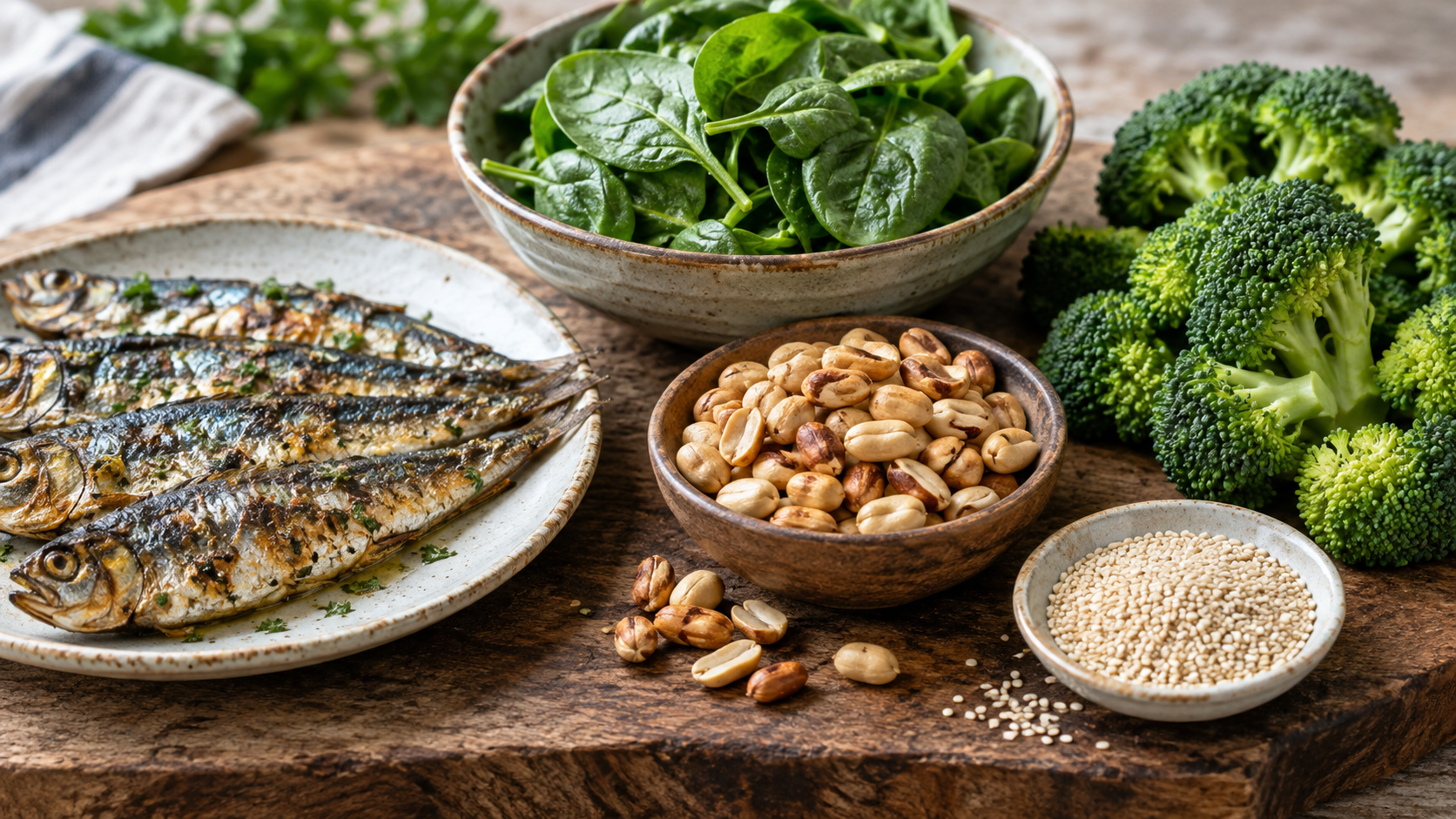
We make less of it as we age, and we get small amounts from food: oily fish like sardines and mackerel, organ meats, peanuts, spinach and broccoli.
Because the brain is such an energy-hungry organ, researchers have long wondered whether topping up CoQ10 could protect it.
Why Is It Being Studied?
Mitochondrial problems and oxidative stress are thought to play a role in brain ageing and in conditions like Parkinson’s disease. That gives CoQ10 a plausible mechanism, not just a marketing story.
There’s also a second thread: statins, widely prescribed for cholesterol, lower the body’s CoQ10 levels, which some researchers suspected might explain statin-related muscle aches.
Plausible mechanisms are a starting point, though, not an answer. The trials are what count.
What Have Human Studies Found?
Parkinson’s disease is where CoQ10 got its big test. An early small trial had hinted that high doses might slow decline, so researchers ran the QE3 trial: more than 600 people with early Parkinson’s, given high-dose CoQ10 or placebo.
The trial was stopped early in 2014 because it clearly wasn’t working. There was no evidence of benefit. That’s about as definitive as negative results get.
For memory and thinking in healthy people, there simply isn’t a body of good trial evidence. No well-designed study shows CoQ10 improves cognition or protects the healthy brain.
To be fair to the molecule, the strongest positive evidence sits elsewhere: the Q-SYMBIO trial found CoQ10 improved outcomes in people with chronic heart failure. That’s a specific medical use under specialist care, and it tells us nothing about brain health in the general population.
Is It Safe?
CoQ10 is generally well tolerated. Side effects, when they happen, are usually mild digestive upset.
One interaction matters: CoQ10 is structurally similar to vitamin K and can reduce the effect of warfarin and similar blood thinners. If you take anticoagulants, or any regular medication, check with your GP or pharmacist before using it.
My answer is:
CoQ10 is an interesting molecule with one genuine medical use in heart failure. But the big Parkinson’s trial found no benefit, and there’s no good evidence it improves memory or protects the healthy brain.
That makes it difficult to say:
“CoQ10 will keep your brain young.”
I’d call that an expensive claim with nothing solid behind it. If you eat oily fish and greens now and then, you’re already getting what nature intended.
Important Note
This article is educational and isn’t intended to diagnose, treat, cure or prevent disease. If you’re experiencing significant changes in memory, thinking, mood or neurological function, seek advice from an appropriately qualified healthcare professional.
References
Parkinson Study Group QE3 Investigators; Beal MF, et al. (2014). A randomized clinical trial of high-dosage coenzyme Q10 in early Parkinson disease: no evidence of benefit. JAMA Neurology, 71(5), 543–552.
Mortensen SA, et al. (2014). The effect of coenzyme Q10 on morbidity and mortality in chronic heart failure: results from Q-SYMBIO: a randomized double-blind trial. JACC: Heart Failure, 2(6), 641–649.
Want to understand more about brain health?
Download the free Suppliwell Brain Health Handbook.