
Key Takeaways
- Caffeine has a half-life of 3 to 7 hours, meaning a 2 p.m. coffee can still circulate in your bloodstream well past midnight.
- Even if you fall asleep fine after an evening coffee, caffeine can quietly disrupt deep, restorative sleep stages without you noticing.
- Your personal caffeine cutoff time depends on genetics, age, liver function, and even whether you’re pregnant or on certain medications.
- Experts generally recommend stopping caffeine 6 to 8 hours before bedtime, though slow metabolizers may need to cut off much earlier.
- Stick around to find out whether decaf is actually safe before bed and how to tell if you’re a slow caffeine metabolizer.
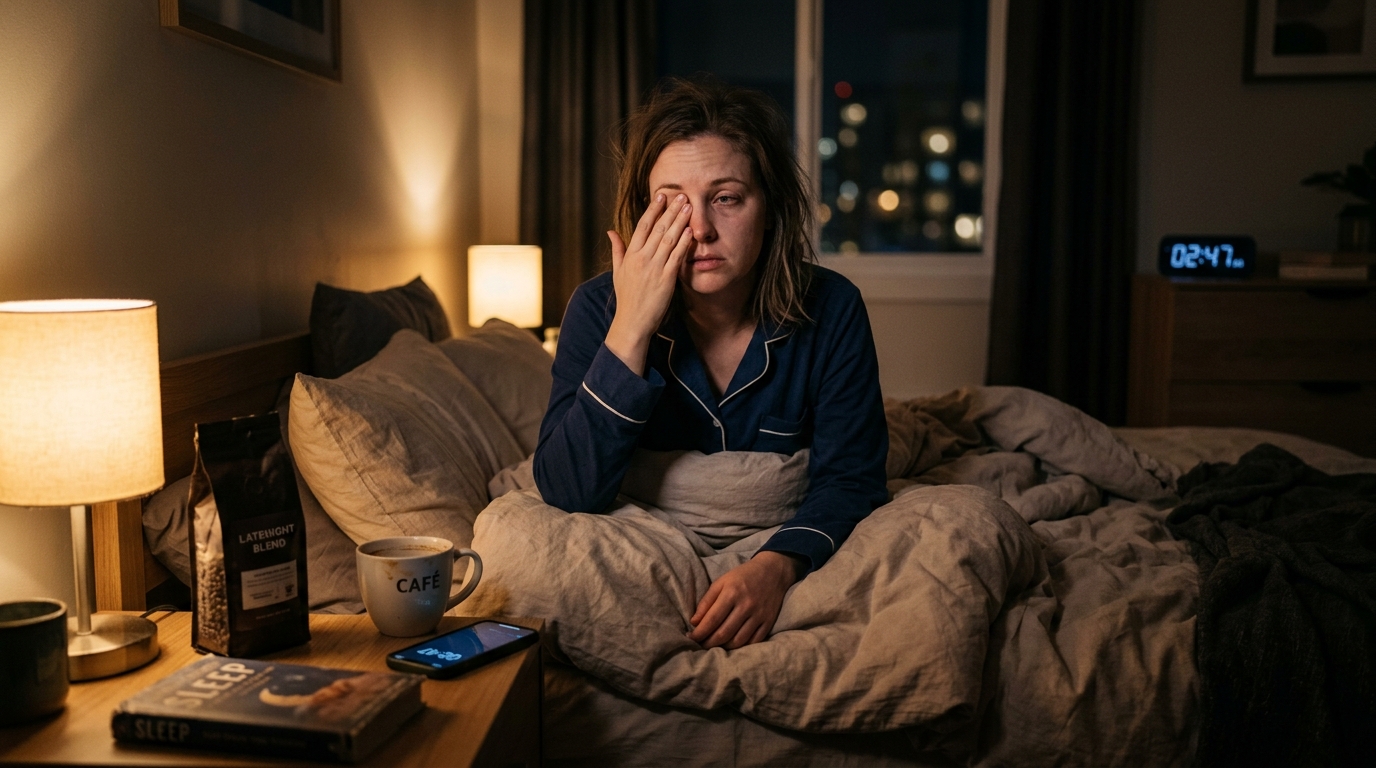
That 3 p.m. latte might feel harmless, but it could be the reason you’re staring at the ceiling at 1 a.m.
Caffeine is the most widely used stimulant on the planet, and most of us drink it without thinking twice about timing. But the science behind how long caffeine lingers in your body tells a very different story than the “I can have coffee and fall right asleep” myth so many people believe. For a deeper look at how sleep quality interacts with daily habits like caffeine intake, the sleep science team at RestWell Sleep Co. has spent years breaking down exactly what happens inside your body long after your mug is empty.
This article explains how caffeine behaves in your system, why some people can nap after espresso while others lie awake for hours, and when you should realistically stop drinking it based on your biology.
Why Your Afternoon Coffee Might Be Stealing Your Sleep Tonight
Here’s the uncomfortable truth: falling asleep after drinking coffee doesn’t mean caffeine isn’t affecting you. It just means you’re falling asleep despite the caffeine, not because it’s gone from your system. Caffeine can still be working against your sleep architecture hours after you’ve dozed off, cutting into the deep and REM sleep stages your brain and body depend on for real recovery.
This disconnect between “falling asleep” and “sleeping well” is exactly why so many people wake up groggy even after logging a full eight hours. The timing of your last cup of coffee matters a lot more than most people realize, and understanding why starts with knowing how long caffeine actually sticks around.
How Long Caffeine Actually Stays in Your System
Caffeine doesn’t just disappear once the energy boost fades. It continues circulating in your bloodstream for hours, quietly working on receptors in your brain even after you’ve stopped feeling “wired.” Knowing the actual timeline helps explain why that 4 p.m. pick-me-up can still be a problem at bedtime.
The key number to understand is caffeine’s half-life: the time it takes your body to eliminate half of the caffeine you consumed. From there, full clearance takes even longer, and the effects can stretch well beyond what you expect.
- Caffeine’s half-life ranges from 3 to 7 hours, depending on the person.
- Complete elimination from your system can take 10 to 15 hours.
- A standard 8-ounce cup of coffee contains roughly 95 to 200 mg of caffeine.
- Caffeine can measurably affect sleep for up to 12 hours after you drink it.
Caffeine’s Half-Life: 3 to 7 Hours Explained
A half-life of 3 to 7 hours means that if you drink a cup of coffee with 200 mg of caffeine, you could still have 100 mg left in your bloodstream several hours later. For most people, the average sits closer to 5 hours, though genetics and other factors can push that number higher or lower. This wide range is exactly why two people can drink the same coffee at the same time and have completely different experiences that night.
Why Full Elimination Can Take 10 to 15 Hours
Half-life only tells part of the story. Even after one half-life has passed, you still have 50% of the original dose left in your system, and it takes multiple half-lives for caffeine to clear out almost entirely. That’s why full elimination can take 10 to 15 hours, especially in people whose bodies process caffeine more slowly because of genetics, age, or liver function.
This extended timeline is also why the “quarter-life” of caffeine matters. At the 12-hour mark, roughly a quarter of your original dose can still be active in your bloodstream, which is enough to interfere with falling into deep sleep even if you don’t feel buzzed anymore.
A Real Example: Tracking 200mg From 2 p.m. to Midnight
Let’s say you drink a 200 mg cup of coffee at 2 p.m. By 7 p.m., assuming a 5-hour half-life, you’d still have roughly 100 mg circulating in your system. Fast forward to midnight, and you could still have close to 50 mg of caffeine active in your bloodstream, which is enough to delay sleep onset and reduce the amount of deep sleep you get that night.
2 p.m.: 200 mg consumed → 7 p.m.: ~100 mg remaining → Midnight: ~50 mg remaining
How Fast Caffeine Kicks In After Your First Sip
Caffeine doesn’t waste any time getting to work. Most people start feeling its effects within 45 minutes of their first sip, as it’s quickly absorbed into the bloodstream and crosses the blood-brain barrier. That rapid onset is part of what makes caffeine such an effective stimulant, but it also shows how quickly it can start interfering with your body’s natural wind-down process if you drink it too late in the day.
What Caffeine Does to Your Brain and Body
To understand why caffeine messes with sleep, it helps to know what it’s actually doing inside your brain. Caffeine isn’t just “giving you energy” in some vague sense. It’s actively blocking specific chemical signals your body uses to tell you it’s time to rest.
Blocking Adenosine: The Science Behind Feeling Alert
Throughout the day, a chemical called adenosine builds up in your brain, gradually increasing feelings of sleepiness the longer you’re awake. Caffeine works by blocking adenosine receptors, essentially locking the doors adenosine needs to signal fatigue. This doesn’t eliminate your sleep pressure; it just prevents your brain from registering it, which is why the tiredness often hits hard once caffeine wears off.
Caffeine’s Effect on Dopamine and Motivation
Beyond blocking adenosine, caffeine also boosts dopamine signaling in the brain, particularly in the prefrontal cortex. This region controls focus, motivation, and mood regulation. That dopamine bump helps explain why coffee feels so good and why it can make tasks feel more manageable, but it’s also why caffeine can feel mentally activating at the wrong time of day.
The Stress Response: Norepinephrine, Heart Rate, and Blood Pressure
At moderate doses, caffeine triggers the release of norepinephrine and epinephrine, two hormones involved in your body’s stress response. This can mildly increase heart rate, blood pressure, and breathing rate, putting your body into a light state of alertness. For most people, this effect is manageable in the morning and afternoon, but it becomes a problem when it overlaps with the hours your body should be winding down.
This stress response is also dose-dependent, meaning the more caffeine you consume, the more pronounced these physical effects become. That’s part of why a small afternoon coffee might be fine, while a large one closer to evening can leave your heart rate elevated right as you’re trying to relax.
When Stimulation Turns Into Anxiety and Sleep Disruption
Higher doses of caffeine push this stimulation further, sometimes tipping into anxiety, jitteriness, and restlessness. For people who are sensitive to caffeine or who consume it too close to bedtime, this overstimulation doesn’t just make falling asleep harder. It can disrupt sleep for hours afterward, even if the initial jittery feeling has faded.
This is the core problem with caffeine and sleep: it’s not just about feeling “awake” in the moment. It’s about the lingering physiological effects that continue working in the background long after the obvious buzz is gone.
5 Factors That Change How Fast You Metabolize Caffeine
Not everyone processes caffeine at the same speed, and that’s not just willpower or tolerance. Several biological and lifestyle factors directly influence how quickly your liver breaks caffeine down, which in turn determines how long it lingers in your system and how much it affects your sleep.
1. The CYP1A2 Liver Enzyme and Genetic Variants
Caffeine is broken down primarily by an enzyme called CYP1A2, produced in the liver. The gene that controls this enzyme comes in different variants, and depending on which version you inherited, you could be classified as a fast or slow metabolizer. Fast metabolizers clear caffeine quickly and rarely feel sleep effects even with afternoon coffee, while slow metabolizers can have caffeine lingering in their system long after they’ve stopped feeling its stimulating effects.
2. Age and Slower Caffeine Clearance
As you get older, your body’s ability to metabolize caffeine tends to slow down. This explains why many people notice they could handle an evening espresso in their twenties but find the same cup keeps them wired into their forties. It’s not just perception; the liver processes caffeine less efficiently over time.
3. Liver Disease and Metabolism Speed
Because the liver breaks down caffeine, any condition that impairs liver function can significantly slow the process. People with liver disease often experience prolonged caffeine effects, sometimes lasting far longer than the typical 3 to 7 hour half-life window.
4. Pregnancy and Dramatically Slower Clearance
Pregnancy causes one of the most dramatic shifts in caffeine metabolism. Clearance can slow so much that caffeine’s half-life extends to 15 hours or more, which is part of why doctors recommend pregnant women significantly limit their caffeine intake, especially later in the day.
5. Medications That Prolong Caffeine’s Half-Life
Certain medications interfere with the liver enzymes that metabolize caffeine, extending how long it stays active in your bloodstream. SSRIs, antipsychotics, and oral contraceptives have all been shown to prolong caffeine’s half-life, which means people taking these medications may need to adjust their caffeine cutoff time earlier than they’d expect.
Does Smoking Change How You Process Caffeine?
Smoking has the opposite effect of pregnancy and certain medications. Rather than slowing caffeine metabolism, smoking speeds it up, roughly doubling the rate at which the body breaks caffeine down.
This may be why smokers sometimes report needing more coffee throughout the day to stay alert. Their bodies are clearing caffeine faster, which shortens its effects and can create a cycle of more frequent consumption.
Non-smoker caffeine half-life: ~5 hours | Smoker caffeine half-life: ~2.5 hours (roughly double the metabolism rate)
Quitting smoking, interestingly, can also change how caffeine affects you. People who quit often find their usual amount of coffee suddenly feels much stronger, simply because their body no longer clears it as quickly.
What Time Should You Really Stop Drinking Coffee?
- General guideline: stop caffeine 6 to 8 hours before bedtime.
- Sensitive individuals or slow metabolizers: consider stopping by late morning.
- Pregnant individuals: limit intake significantly and avoid afternoon caffeine entirely.
- People on certain medications: check with a doctor, as cutoff times may need to be earlier.
There’s no single magic number that works for everyone, because your ideal caffeine cutoff depends heavily on your personal metabolism, age, and health status. That said, researchers and sleep experts have landed on a few general guidelines that work well for most people.
The challenge is that most people don’t know which category they fall into until they pay closer attention to how caffeine affects their sleep quality, not just whether they can fall asleep.
Tracking your sleep after different caffeine cutoff times for a week or two can reveal a lot. If you notice lighter sleep, more nighttime waking, or grogginess after afternoon coffee, that’s a sign your personal cutoff needs to move earlier.
The Standard 6 to 8 Hour Rule Before Bed
Most sleep experts recommend stopping caffeine intake at least 6 to 8 hours before bedtime. If you plan to sleep at 10 p.m., your last cup of coffee should ideally be no later than 2 p.m. This window accounts for caffeine’s average half-life and gives your body enough time to clear a significant portion before you try to fall asleep.
Why Slow Metabolizers Should Stop by 10 a.m.
- Feeling wired long after everyone else has relaxed
- Struggling to fall asleep even after moderate caffeine intake earlier in the day
- Experiencing anxiety or restlessness from relatively small doses
- Waking up unrefreshed despite getting a full 8 hours in bed
If any of these sound familiar, you may be a slow metabolizer who needs a much earlier cutoff than the general population. For these individuals, stopping caffeine intake by 10 a.m. can make a noticeable difference in both sleep onset and overall sleep quality.
The extended half-life in slow metabolizers means even a mid-morning coffee could still be partially active well into the evening, quietly working against their ability to wind down.
The 12-Hour Quarter-Life Rule From “Why We Sleep”
In his widely referenced book Why We Sleep, sleep researcher Matthew Walker discusses caffeine’s quarter-life, which is the time it takes for a quarter of the original dose to remain in your system. By this logic, if you drink a cup of coffee at noon, you could still have about a quarter of that caffeine circulating in your bloodstream at midnight.
Walker’s work also points out an important nuance: just because someone falls asleep easily after an evening coffee doesn’t mean caffeine isn’t affecting them. It may simply mean they’re masking an underlying sleep debt, falling asleep out of sheer exhaustion rather than because caffeine has cleared their system.
Comparing Expert Cutoffs: 1 p.m., 2 p.m., and 3 p.m.
Different sources land on slightly different cutoff recommendations, though they tend to cluster in the early afternoon. Some experts recommend stopping caffeine by 1 p.m. for maximum safety, especially for people with known sleep issues. Others suggest 2 p.m. as a reasonable middle ground that accounts for the average half-life without being overly restrictive. Still others point to 3 p.m. as the latest safe cutoff for people with faster metabolisms and no history of sleep disruption.
The right answer ultimately depends on testing your own tolerance. If you consistently sleep well after a 2 p.m. coffee, that’s useful data about your personal metabolism. If you notice restlessness or shallow sleep, move your cutoff earlier until your sleep quality improves.
Are You a Slow Caffeine Metabolizer? Signs to Watch For
Many people go years without realizing they’re slow caffeine metabolizers, chalking up their restless nights to stress, screen time, or an uncomfortable mattress. But if caffeine lingers unusually long in your system, it could be the hidden culprit behind your sleep struggles.
4 Common Signs Your Body Processes Caffeine Slowly
Slow metabolizers tend to share a recognizable pattern of symptoms. They often feel energized or “wired” long after friends or family who had the same amount of caffeine have settled down for the evening. They may also notice heightened anxiety or jitteriness from even small amounts of caffeine, a sign their body isn’t clearing it efficiently.
Perhaps most telling, slow metabolizers often struggle to fall asleep despite feeling physically tired, and they frequently wake up feeling unrefreshed even after a full night’s sleep. This combination of symptoms strongly suggests caffeine is still active in their system long after they expect it to be.
Why Slow Metabolizers Face Higher Insomnia Risk
Because caffeine stays active longer in slow metabolizers, they’re at a greater risk for caffeine-induced insomnia, elevated blood pressure, and chronic daytime fatigue. This creates a frustrating cycle: poor sleep leads to increased caffeine consumption the next day to compensate, which then further disrupts sleep that night.
Why Caffeine Sensitivity Isn’t the Same for Everyone
Caffeine sensitivity is deeply individual, shaped by a combination of genetics, lifestyle, and daily habits. Understanding where you fall on this spectrum can help you make smarter decisions about when and how much caffeine to consume.
How Tolerance Builds With Daily Intake
Regular caffeine consumption builds tolerance over time, meaning your body adapts to handle the same dose with less noticeable effect. This is why a daily coffee drinker might need two cups to feel the same alertness that one cup provided when they first started.
However, tolerance to the alertness effects doesn’t necessarily mean your body has gotten better at processing caffeine. You might feel less “buzzed,” but caffeine could still linger and affect your sleep architecture, even if you don’t consciously notice it.
This is why some people mistakenly believe they’re immune to caffeine’s sleep effects, when in reality they’ve simply stopped noticing the subjective alertness while the physiological impact continues.
The Rare Genetic Variant That Speeds Up Metabolism
A small percentage of the population carries a rare genetic variant that lets them metabolize caffeine much faster than average. For these individuals, even a late-evening espresso may have minimal impact on their ability to fall and stay asleep.
This genetic difference helps explain why anecdotal claims like “I drink coffee right before bed and sleep just fine” can be true for some people but not for the general population. Without genetic testing, there’s no reliable way to know whether you fall into this rare category, so it’s safer to follow general cutoff guidelines unless you have strong personal evidence to the contrary.
Why Caffeine Sensitivity Often Increases After Your 30s
Many people report a noticeable shift in caffeine tolerance as they move through their thirties and beyond. Coffee that once had no effect on nighttime sleep starts causing noticeable restlessness, and what used to be an evening treat becomes an afternoon-only indulgence.
This shift aligns with the broader pattern of slower caffeine metabolism as we age, reinforcing the idea that your caffeine habits may need to evolve over time rather than stay fixed throughout your life.
Does Decaf Coffee Still Affect Your Sleep?
Decaf coffee isn’t actually caffeine-free, despite what the name implies. It contains much less caffeine than regular coffee, but that smaller amount can still cause problems for some people.
For most individuals, decaf poses little to no risk to sleep quality. But for those who are highly sensitive to caffeine, slow metabolizers, or people dealing with insomnia or anxiety, even the reduced caffeine content in decaf can be enough to disrupt sleep onset or quality.
Another consideration: some studies have raised concerns about the chemical processes used to decaffeinate coffee, pointing to potential carcinogens in certain decaffeination methods. This doesn’t mean decaf is dangerous for most people, but it’s a factor some health-conscious coffee drinkers choose to research further.
If you react strongly to small amounts of caffeine, it’s worth testing how your body responds to decaf before assuming it’s a safe late-day alternative.
- Decaf still contains measurable amounts of caffeine, just significantly less than regular coffee.
- Sensitive individuals may still experience sleep disruption from decaf.
- Decaffeination processes vary, and some involve chemicals worth researching if you’re health-conscious.
- Testing your personal response to decaf is the most reliable way to know if it affects your sleep.
Feeling Tired Isn’t the Same as Sleeping Well
One of the biggest misconceptions about caffeine and sleep is the assumption that falling asleep quickly means caffeine had no effect. In reality, your ability to fall asleep and your ability to get high-quality, restorative sleep are two different things, and caffeine can interfere with the second even when it doesn’t affect the first.
This is why some people drink coffee late in the day, fall asleep without issue, and still wake up feeling groggy and unrefreshed. The caffeine didn’t prevent sleep onset, but it likely reduced the amount of deep sleep and REM sleep they experienced, the stages responsible for physical recovery and cognitive restoration. Recognizing this distinction is often the first step toward making smarter caffeine choices that protect not just your ability to fall asleep, but the actual quality of rest you get once you do.
How Caffeine Disrupts Sleep Architecture Without You Noticing
Sleep isn’t one uniform state. It moves through cycles of light sleep, deep sleep, and REM sleep, each playing a distinct role in physical repair, memory consolidation, and emotional processing. Caffeine, even in small lingering amounts, can shift the balance of these stages without ever fully waking you up.
Specifically, caffeine tends to reduce time spent in deep sleep, the stage most responsible for physical restoration and immune function. It can also delay the onset of REM sleep, pushing back when your brain starts processing the day’s memories and emotions. The result is a night that looks complete on a sleep tracker but doesn’t actually deliver the restorative benefits your body needs.
This is especially tricky because these disruptions often go unnoticed in the moment. You may not remember waking up more often during the night or spending less time in deep sleep. You’ll just notice the downstream effect: grogginess, brain fog, or an unexplained drop in mood the next day.
7 Strategies to Protect Your Sleep While Still Enjoying Caffeine
The good news is that you don’t have to quit caffeine entirely to protect your sleep. With a few intentional adjustments, you can keep your coffee ritual while minimizing its impact on your nights.
Rule of thumb: if you can’t remember the last time you tested a caffeine-free evening, your current cutoff time might be doing more damage than you realize.
Here are seven practical strategies that sleep-conscious coffee drinkers can start using right away.
1. Set a Personal Caffeine Cutoff Time
Instead of relying on a generic rule, set a cutoff time based on your sleep patterns. Start with the 6 to 8 hour guideline, then adjust earlier or later depending on how your sleep quality responds over a couple of weeks.
2. Cap Daily Intake at 400mg
Most health guidelines suggest keeping total daily caffeine intake under 400 mg, which translates to roughly 3 to 4 small cups of coffee. Staying under this threshold reduces your overall caffeine load and makes it easier for your body to clear it out before bedtime.
Going over this amount regularly increases the odds that caffeine is still active in your system at night, even if you’ve technically respected your cutoff time earlier in the day.
3. Watch for Hidden Caffeine in Tea, Chocolate, and Medications
Coffee isn’t the only source of caffeine worth tracking. Tea, chocolate, soda, and even certain over-the-counter medications contain caffeine that can add up quickly without you realizing it.
If you’re trying to manage your intake carefully, check labels on pain relievers, energy bars, and soft drinks, since these hidden sources can quietly push you past your daily limit.
4. Track Your Body’s Personal Threshold
Everyone’s threshold for noticeable sleep disruption is different. Keeping a simple log of what you drink, when you drink it, and how you sleep that night can reveal patterns that generic advice simply can’t capture.
5. Try a 7 to 14 Day Caffeine Reset
If you’re unsure how much caffeine is truly affecting your sleep, consider going caffeine-free for 7 to 14 days. This reset allows your tolerance to recalibrate and gives you a clearer baseline for how your body functions without it.
Many people are surprised to discover how much energy they have naturally once their body stops relying on caffeine to mask underlying fatigue. After the reset, reintroducing caffeine thoughtfully can help you find a sustainable, sleep-friendly routine.
This process also makes it much easier to identify your true sensitivity level, since you’re no longer working against a baseline tolerance built up from daily use.
6. Drink Coffee During Your Natural Cortisol Peak
Your body’s cortisol levels naturally peak in the morning, roughly between 7 a.m. and 10 a.m. Drinking coffee during this window works with your body’s natural alertness cycle rather than against it, making your caffeine more effective while reducing the temptation to reach for more later in the day.
7. Swap Afternoon Coffee for Herbal Alternatives
If you’re used to an afternoon coffee ritual, replacing it with something caffeine-free can help maintain the habit without the sleep consequences. Herbal tea, warm lemon water, or golden milk can offer a similar comforting break in your day.
These alternatives won’t deliver the same jolt of alertness, but they can satisfy the routine and warmth people often crave from an afternoon drink, without adding to your evening caffeine load.
Your Cutoff Time Depends on Your Biology, Not the Clock
No universal caffeine cutoff time works for everyone, and chasing one misses the point. Your ideal cutoff depends on your genetics, age, medication use, and even whether you smoke or are pregnant, all of which shape how quickly your body clears caffeine from your system.
The smartest approach isn’t memorizing a rule; it’s paying attention to your own sleep quality and adjusting accordingly. Once you understand how your body uniquely processes caffeine, you can enjoy your coffee ritual without quietly sacrificing the deep, restorative sleep your body depends on.
Frequently Asked Questions
These quick answers tackle some of the most common questions people have about caffeine timing and its effects on sleep.
How many hours before bed should I stop drinking coffee?
Most experts recommend stopping caffeine intake 6 to 8 hours before bedtime. If you’re a slow metabolizer or especially sensitive to caffeine, you may need to stop even earlier, sometimes by late morning.
The safest approach is to start with the standard guideline and adjust based on how your own sleep quality responds over time.
Can decaf coffee still keep me awake at night?
Yes, decaf coffee still contains a small amount of caffeine, and for sensitive individuals, slow metabolizers, or people dealing with insomnia or anxiety, that small amount can be enough to disrupt sleep.
Why can I drink coffee at night and still fall asleep fine?
If you can drink coffee at night and still fall asleep without trouble, you may be a fast metabolizer, or you may be falling asleep because of an underlying sleep debt rather than because the caffeine has cleared your system. Falling asleep quickly doesn’t necessarily mean caffeine isn’t affecting sleep quality once you’re asleep.
In fact, research referenced in Matthew Walker’s Why We Sleep suggests that easy sleep onset after late caffeine might actually mask a deeper issue with chronic sleep deprivation.
Fast metabolizer: clears caffeine quickly, minimal sleep impact | Masked sleep debt: falls asleep easily, but sleep quality still suffers
Does caffeine sensitivity get worse with age?
Yes, many people notice increased caffeine sensitivity as they get older. This aligns with research showing that caffeine metabolism naturally slows with age, meaning the same cup of coffee that was harmless in your twenties may start disrupting your sleep in your thirties and beyond.
If you’ve noticed this shift personally, it’s a sign worth listening to, not dismissing as a coincidence.
What are the signs that caffeine is disrupting my sleep without me realizing it?
Several subtle signs can indicate caffeine is affecting your sleep quality, even if you don’t have obvious trouble falling asleep. Watch for these patterns:
- Waking up groggy despite getting a full 8 hours of sleep
- Feeling restless or waking frequently during the night
- Needing more caffeine than usual just to feel normal the next day
- Experiencing anxiety or a racing heart in the evening hours
If several of these sound familiar, it may be worth trying an earlier caffeine cutoff or a 7- to 14-day reset to see whether your sleep quality improves.
Paying closer attention to these subtle signals, rather than just whether you fall asleep, is often the key to finally connecting the dots between your afternoon coffee and your restless nights.